Boxing and Architecture
I started boxing because I had a brother six years older than me.
As happens between many brothers, he spent much of my childhood reminding me who was stronger. I always fought back. I never liked standing still or taking a punch without trying to return it. The problem was that there was a size difference between us that was impossible to ignore. He was taller, stronger, and bigger. I only had enough courage to keep trying.
For a long time, I thought I had started boxing to learn how to defend myself from him.
Now I see that this was only the excuse. What truly attracted me was going with him to training, watching the ritual that repeated itself every day: the sound of the rope hitting the floor, the smell of the gloves, the hand wraps, the focus mitts, the discipline. Without realizing it, what fascinated me was not the fight, but the training.
Over the years, I understood that boxing ended up teaching me how to defend myself from many other things.
There are crafts that can only be learned through the body.
We can read about them, study those who practice them, or admire their work, but there comes a point when knowledge stops belonging to books and begins to settle into the muscles, into the breath, into the body's memory. Repetition eventually builds a different way of looking at the world.
For a long time, I thought architecture had been the first craft I learned in that way.
Then I understood that it had not.
The first had been boxing.
I entered the gym as a child and was fortunate enough to find teachers who understood boxing as a craft before they understood it as a spectacle.
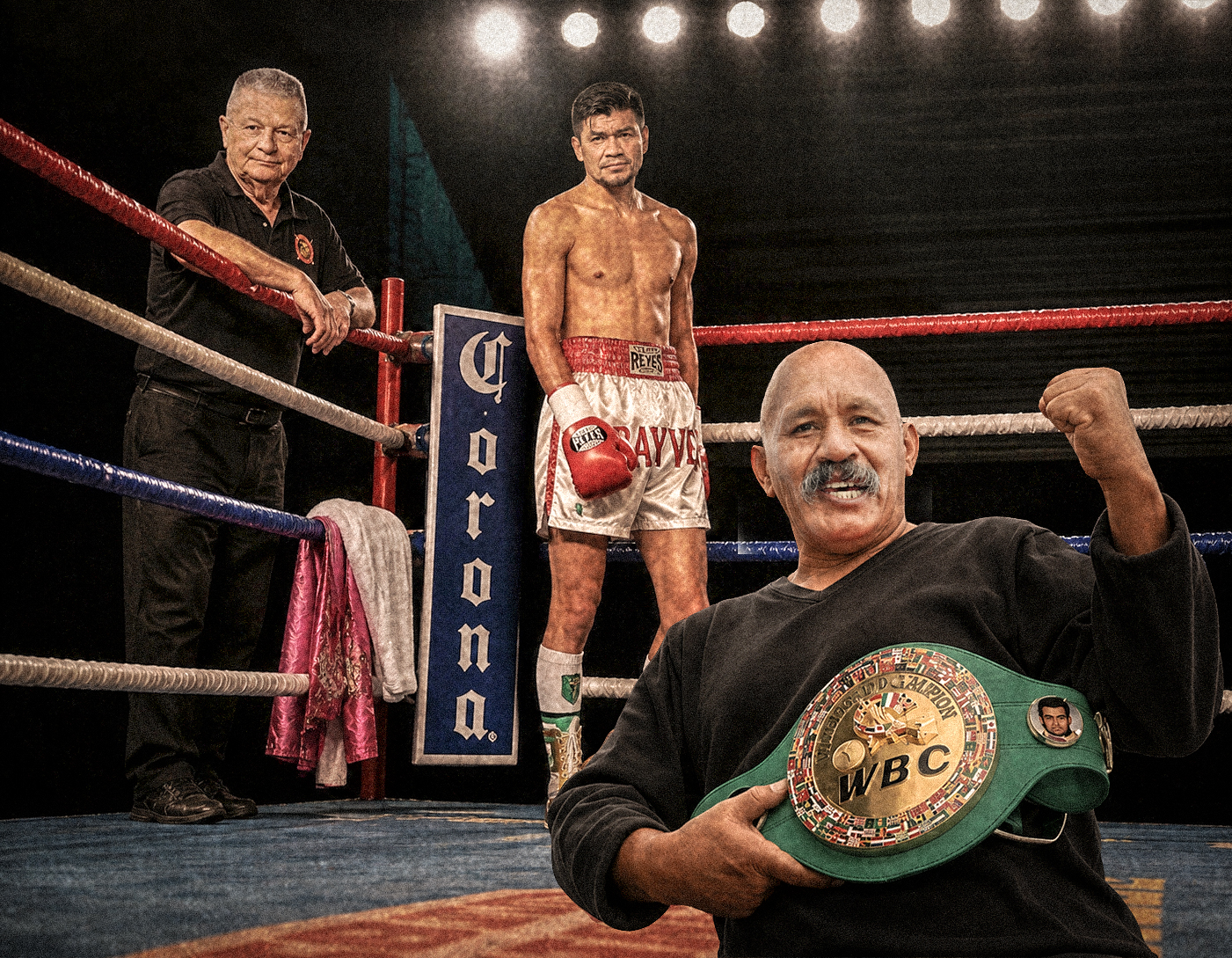
The first was Lupe Pintor, the Cricket of Cuajimalpa.
When you are seven years old, you want to learn how to throw punches. He, however, insisted on the guard, footwork, balance, and even the correct way to wrap the hands. Before attacking, you had to learn how to stand. Before looking for speed, you had to repeat the same movement again and again.
At that age, repetition seemed boring.
Only much later did I understand that I was not learning only a sport.
I was discovering that no serious craft is built on shortcuts.
With Lupe, I learned technique: working the mitts, jumping rope correctly, stepping into the ring and taking the first hard blows, defending myself, working the double-end bag, and understanding that the foundations support everything else. I stayed with him until I was twelve.
Then came Reynaldo "El Payaso" Bravo.
With him, I discovered that a well-executed punch is worth more than a spectacular combination done badly. Before searching for complex movements, you had to master the essentials. Precision always came before spectacle.
We trained for hours with the body protector. I learned to punch with power, to keep moving forward, to protect the body, and, for the first time, I felt that technique was beginning to become natural.
Later, Sergeant Major Fred Robertson appeared and changed everything again.
He came from a school completely different from the Mexican style I had grown up with: less frontal, more patient, more concerned with endurance than with the constant exchange of punches. He practically forced me to start over.
He made us run entire miles before training.
I remember how desperate it made me feel. I thought I had joined the boxing team, not the cross-country team. We stopped jumping rope with the same intensity. The mitts appeared less and less. The body protector practically disappeared. We ran, ran, and then stepped into the ring.
For a while, I felt as though I was unlearning.
In reality, I was expanding my way of understanding boxing.
I discovered that no single method works for every fight.
You have to learn to change strategy, to adapt, to reconsider what you have learned, and to develop enough endurance to last through every round.
Waiting is also a way of fighting.
Stepping back a few inches can open an angle that did not exist before.
Covering up is not always an act of fear; often, it is a sign of intelligence.
Over time, I understood that designing architecture demands exactly the same disposition.
Many people imagine that an architect's work consists of designing buildings. I believe it consists, above all, of learning how to observe. To observe with enough attention to formulate the right questions before attempting to answer them. Designing is not producing forms; it is solving problems whose nature changes with every project.
No project resembles the one before it. The client changes, the site changes, the topography, the budget, the construction techniques, the regulations, and even the convictions with which one began designing. What seemed like a certainty at the beginning often transforms as the project finds its own logic.
Each building demands a different attitude.
It resembles an opponent, though not because it must be defeated, but because it forces you to study it carefully. You have to read the place, understand its constraints, discover its possibilities, and accept that there is no single way to resolve it. Architecture admits no recipes; it demands constant attention.
Designing means remaining alert. Listening to what the project asks for instead of imposing an answer on it from the beginning.
While reading Pritzker Words, by Llàtzer Moix, I found a conversation with Tadao Ando that finally gave a name to an intuition that had accompanied me for years.
In the chapter Fighting Spirit, Ando explains that he understood very early that he would never become a great boxer. Boxing, however, left him with something far more valuable: a way of facing the world. Staying alert. Remaining present. Learning continuously.
When I closed the book, I had the feeling that I was not reading only about him.
I was also finding an explanation for my own way of practicing architecture.
This craft demands the same thing.
Observe before intervening.
Understand before drawing.
Read the space before transforming it.
In Mexico, we often speak of the so-called Mexican style of boxing: always moving forward, applying pressure, giving up no ground.
Sometimes I think Mexican architects work according to a similar logic.
We live surrounded by impossible deadlines, urgent decisions, tight budgets, and constant pressure to produce faster. As though moving forward were always the only answer.
But a good boxer does not win only because he knows how to attack.
He wins because he recognizes the rhythm of the fight.
Because he identifies the precise instant in which to change strategy.
Because he knows how to wait.
Something similar happens in architecture.
The best decisions rarely appear when we speed up the drawing or insist on solving a problem through exhaustion. They tend to emerge when we are able to stop, walk through the project again, question a decision, or accept that someone else may see clearly what we have already stopped seeing.
There are times when moving forward means stopping.
Thinking is also part of the work.
Writing.
Going for a walk.
Walking through a building again.
Building one more model.
Looking at a sketch again the next day.
None of that is wasted time.
It is part of the project.
Architecture also needs distance in order to find precision.
Fights are almost never won with the strongest punch.
They are won with distance.
With rhythm.
With the ability to recognize the exact moment when an opportunity appears.
Perhaps that is why I have never been too interested in buildings that can be understood from a single photograph.
I prefer those that force you to walk through them.
Those that change scale as you move forward.
Those that compress space before opening it.
Those that manage light in order to reveal a courtyard, frame a view, or make a material appear little by little.
I am interested in buildings that construct a sequence rather than an image; those that never reveal all their information from the first instant.
Surprise in architecture does not depend on a spectacular gesture.
It depends on the journey.
I have tried to make our projects emerge in that same way.
In Casa LL, the architecture is barely suggested from the street. The volume settles into the mountain without trying to impose itself upon it. Only after crossing the entrance does the courtyard appear, and as the route continues, the landscape reveals itself again from another scale and with another depth.
Something similar happens at Hotel Laiva.
The façade establishes an initial relationship with whoever arrives, but the true experience begins when one passes through it. The space changes proportion, compresses the route, then releases it, contains it again, and finally reaches an atmosphere of greater intimacy.
We never sought to surprise through an extravagant form.
We preferred the architecture to be discovered by walking through it.
For each space to prepare the next.
For the building to preserve something for whoever decides to stay a little longer.
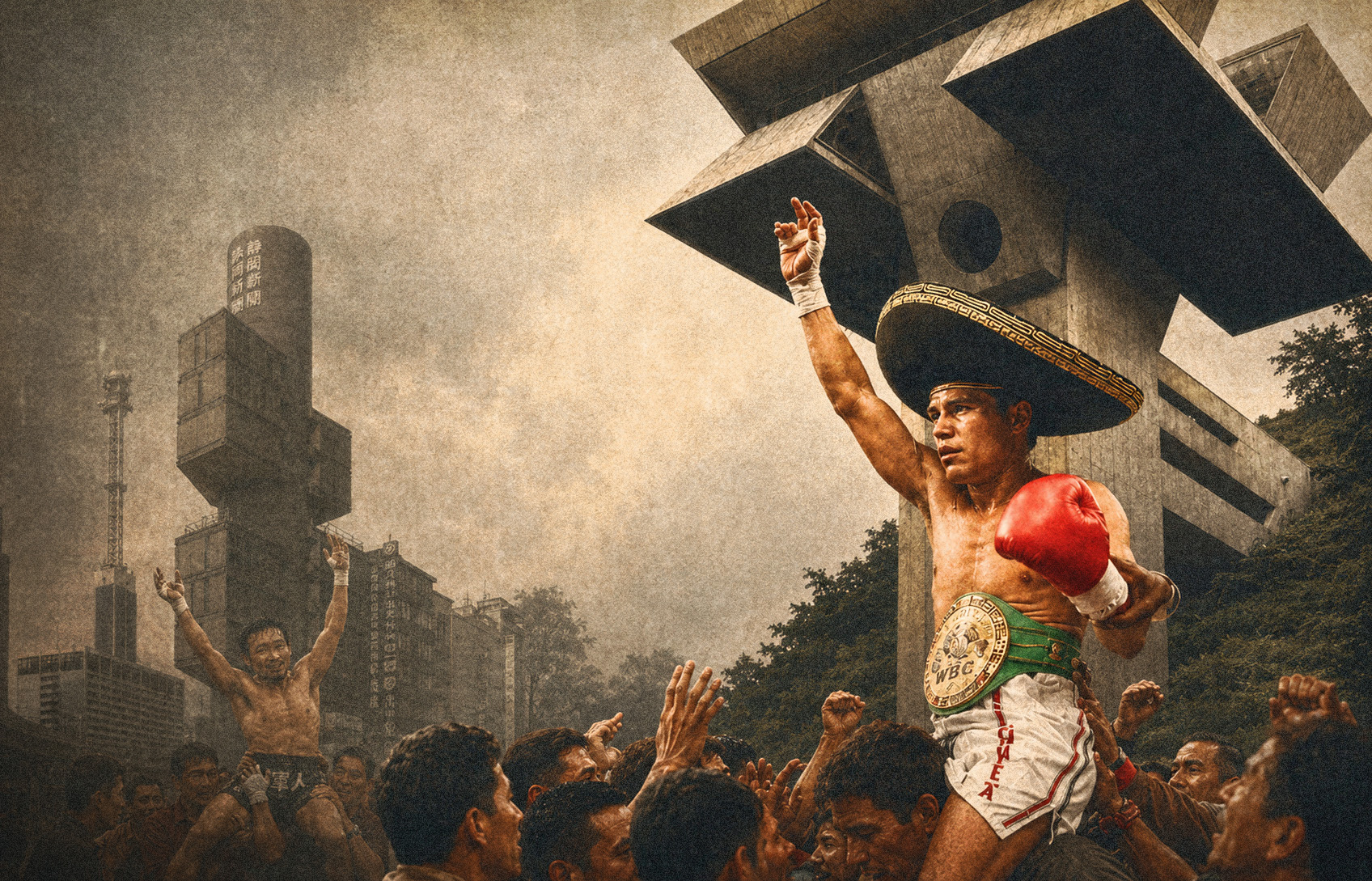
I never stopped boxing.
I only stopped competing.
I still step into the gym from time to time. Not because I expect to become a professional or because I have something to prove. I do it because there is something deeply calming about putting the gloves back on after a difficult week.
The body remembers things the mind tends to forget.
When I studied at the Marine Military Academy, I had the opportunity to represent the school at the RGV Golden Gloves Tournament, one of the most important amateur boxing tournaments in South Texas.
I lost the final.
For some time, that defeat weighed on me more than I would have liked to admit.
Today, I almost never think about that fight.
Instead, I think about the Golden Gloves patch that is still sewn onto my jacket.
It does not represent a victory.
It represents everything that happened before stepping into the ring.
The hours of training.
The miles traveled.
The hands wrapped again and again.
The early mornings.
The punches.
The mistakes.
The discipline.
That patch ended up meaning far more than any medal.
It reminds me that some dreams also come true when the result does not match what we imagined.
Perhaps the greatest lesson boxing left me never had anything to do with throwing a better punch.
It had to do with learning how to observe.
With returning to the gym on the days when motivation disappears and only discipline remains.
With discovering that training matters far more than the fight.
People remember the boxer for the night of the fight.
They rarely think about the months in the gym that made those minutes in the ring possible.
Exactly the same thing happens with architecture.
Buildings usually become known when they are published.
People rarely talk about the years of drawings, models, site walks, meetings, program changes, budgets that force one to begin again, decisions corrected again and again, or projects that were never built.
The finished work is only the visible part of a much longer process.
The fight lasts a few minutes.
The training occupies almost an entire lifetime.
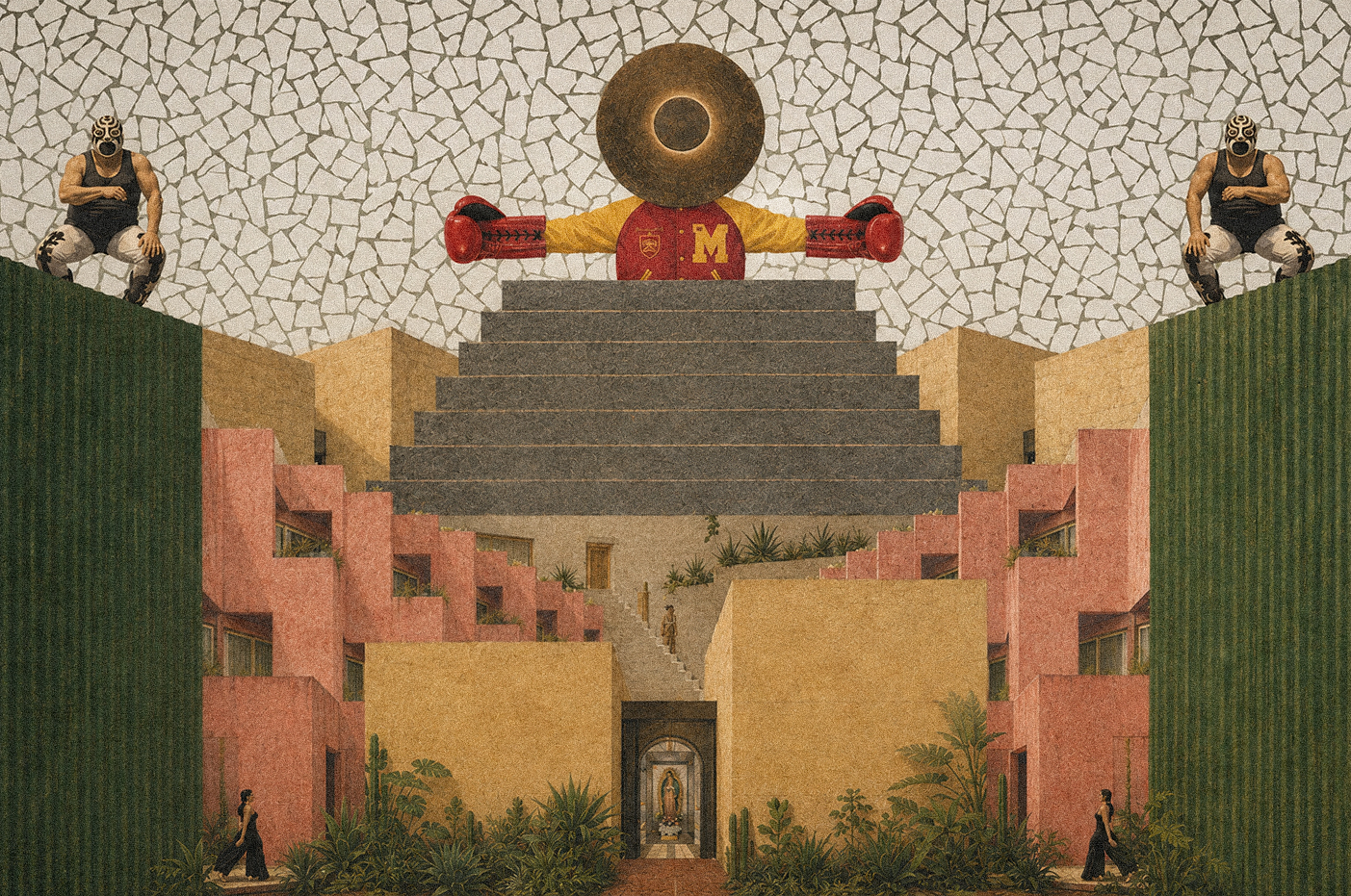
Today, I think a good building resembles a good boxer more than I imagined when I was a child.
Not because it is aggressive.
But because it knows how to act intelligently.
It knows how to change rhythm when the project demands it.
It knows how to restrain itself when a gesture is unnecessary.
It knows how to wait when the best answer has not yet appeared.
And it knows how to surprise without needing to raise its voice.
Buildings, like fights, reveal only a small part of the story.
What truly matters always happened before.
Between one training session and the next.
Between one sketch and the next.
Between a conversation with the client, a visit to the construction site, a discarded model, or a decision that forced everything to be reconsidered.
It is there, in that silent work that almost no one sees, where a good boxer is truly formed.
And, I suspect, a good architect as well.