RA! Three characters. A cheer.
What does RA! mean?
It is a question we have been asked many times.
Clients ask it over lunch, students ask it at the end of a lecture, and suppliers ask it when they see the office logo for the first time.
—What does RA! mean?
Some think they are initials. Others think it is an invented word. Almost everyone is curious about the exclamation mark.
RA was born from a play on two surnames.
The first syllable of Ramírez de Aguilar and the last of Sierra.
That is why, from the beginning, we decided to write Sierra first and Ramírez de Aguilar second, even though alphabetical order suggested otherwise. We wanted the meeting of those two syllables to be evident. The office was born, literally, at the point where two families came together.
For a few years, the logo also included our surnames.
It no longer does.
Only RA! remains.
We never planned it that way. Over time, it simply stopped being necessary to explain where the name came from.
There is also a coincidence that eventually became part of its meaning.
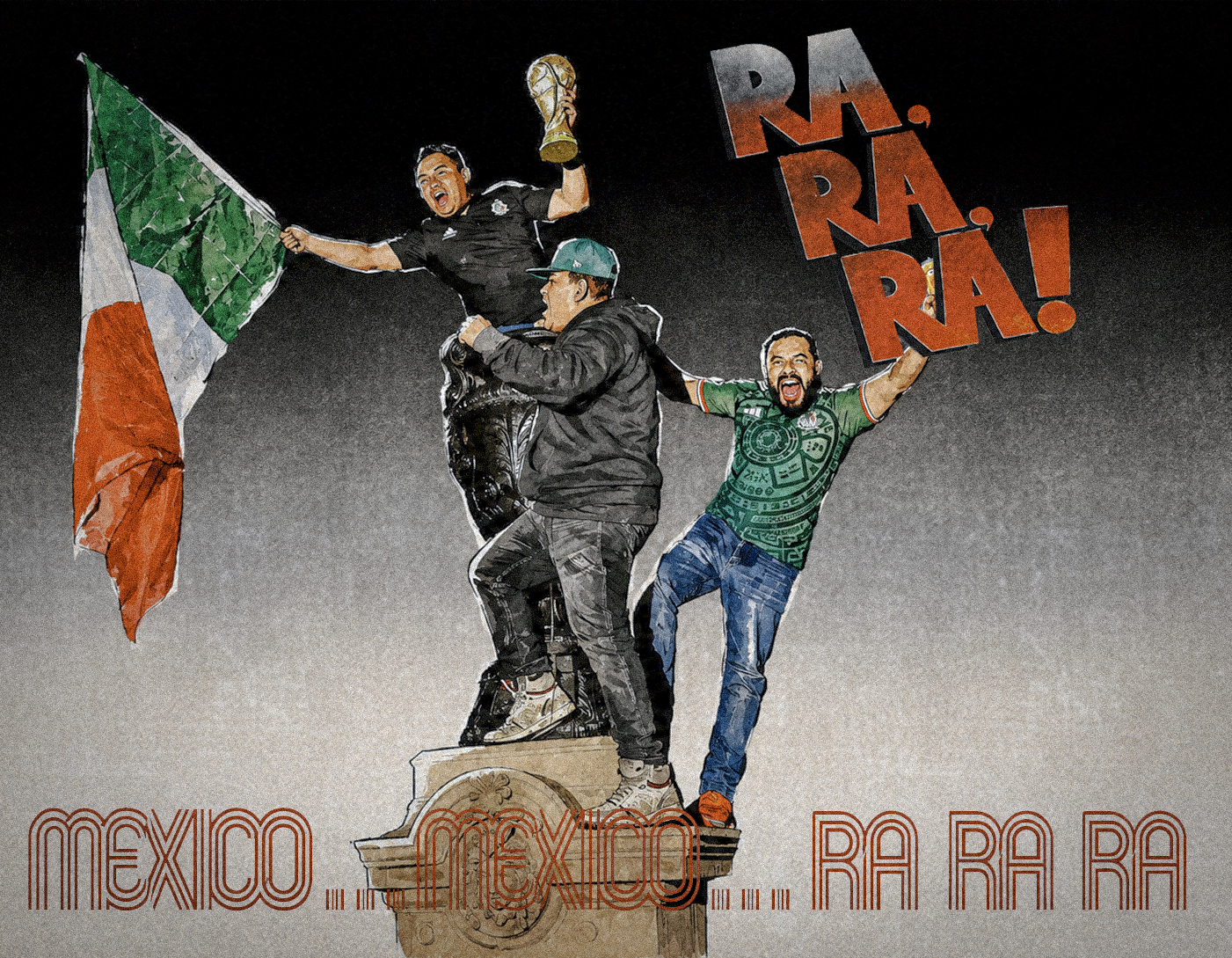
In Mexico, we all know an expression we learn as children.
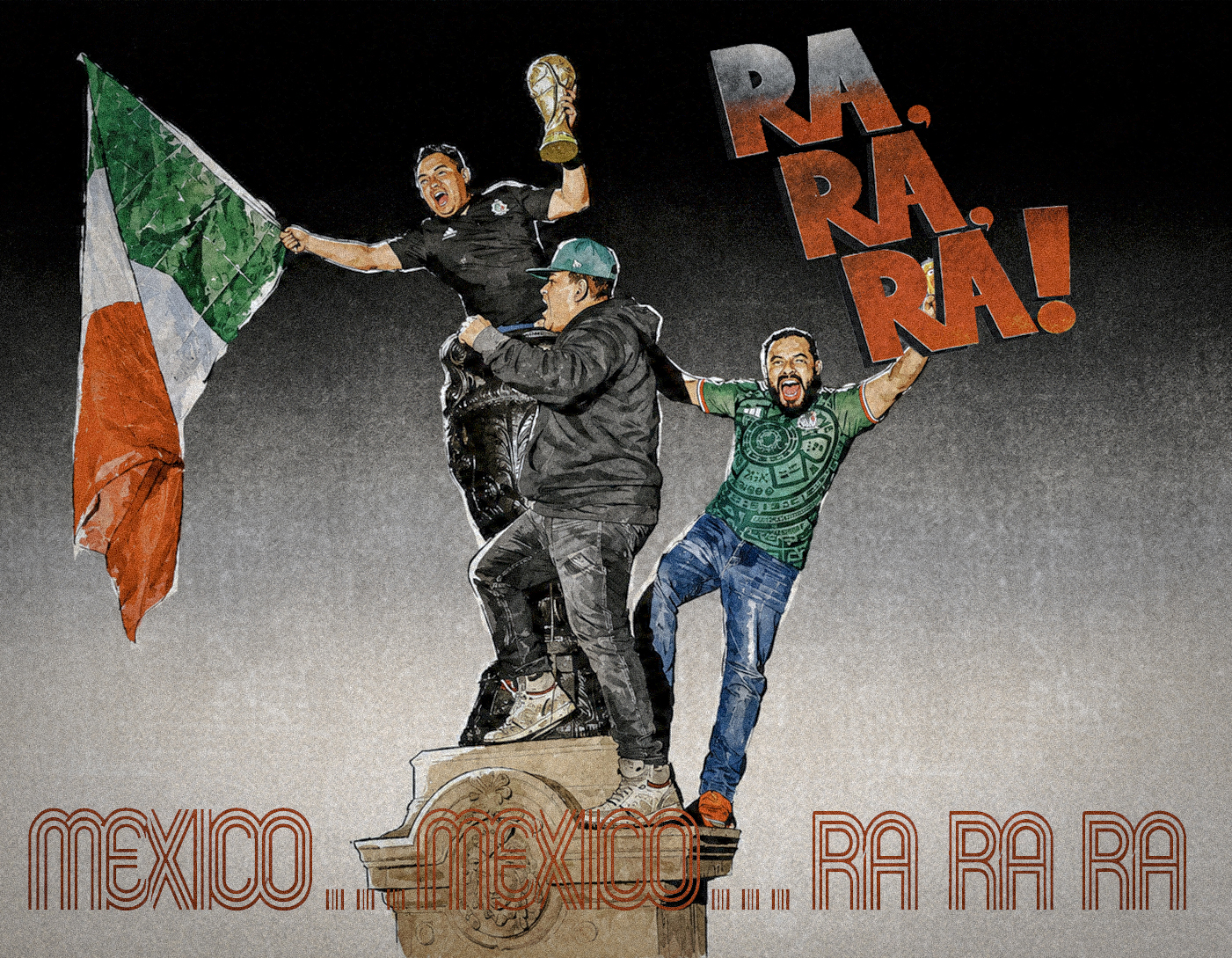
Ra, ra, ra!
It can be heard in school cheers, in stadiums, and anywhere a group decides to support someone else.
It means nothing on its own.
It is enthusiasm.
It is shared energy.
We liked the idea that an architecture office could begin that way: not from solemnity, but from the enthusiasm of building something together.
Then the exclamation mark appeared.
It was never a graphic device.
It was a declaration of intent.
We wanted to work with intensity. To question. To propose. To discuss. To learn. Not to settle for the first answer.
Over time, I discovered that the name also began to speak about us.
Or perhaps I was the one who eventually found new meanings in something that had initially been much simpler.
Memory has that habit.
Today, I find it difficult to see RA! only as a name.
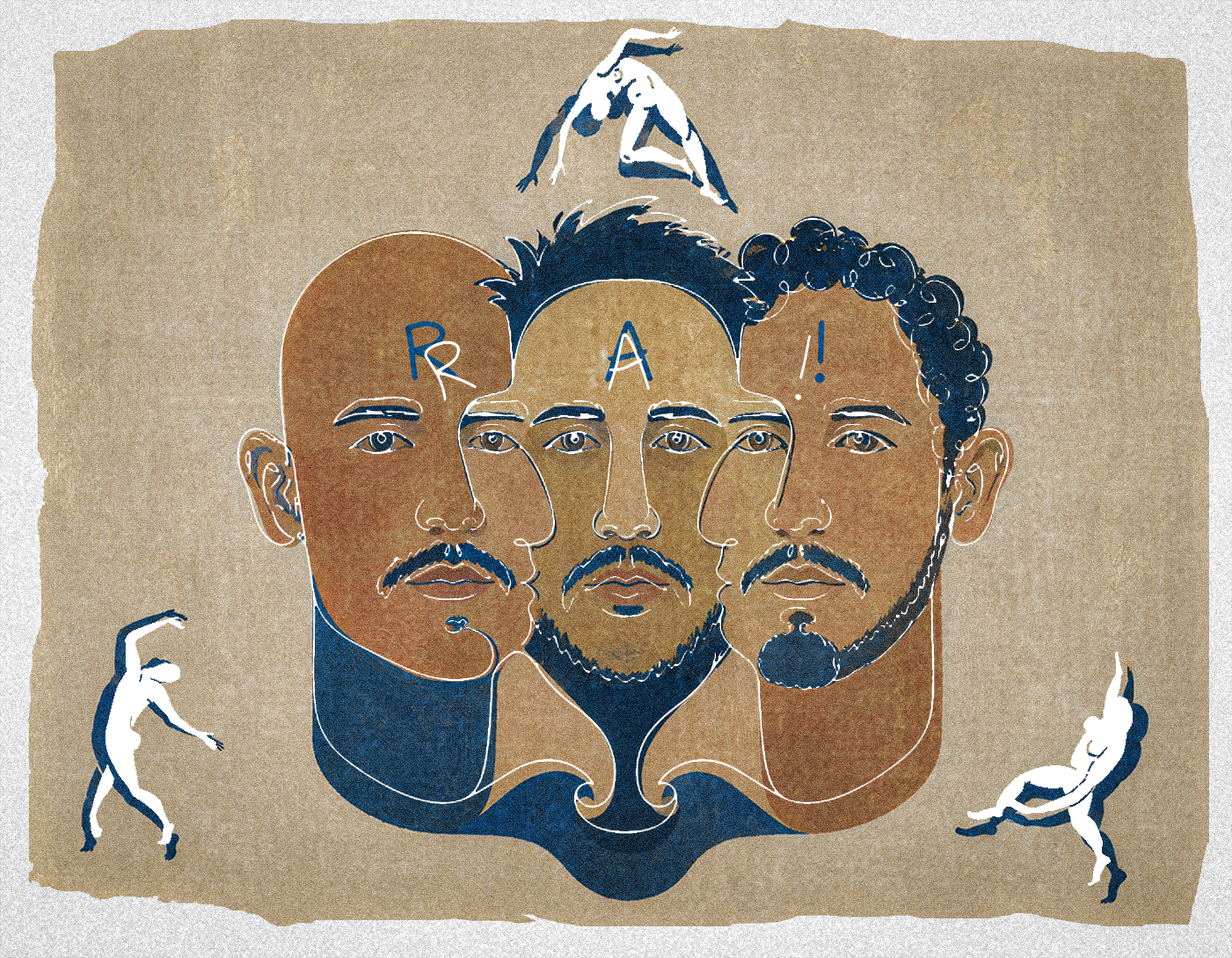
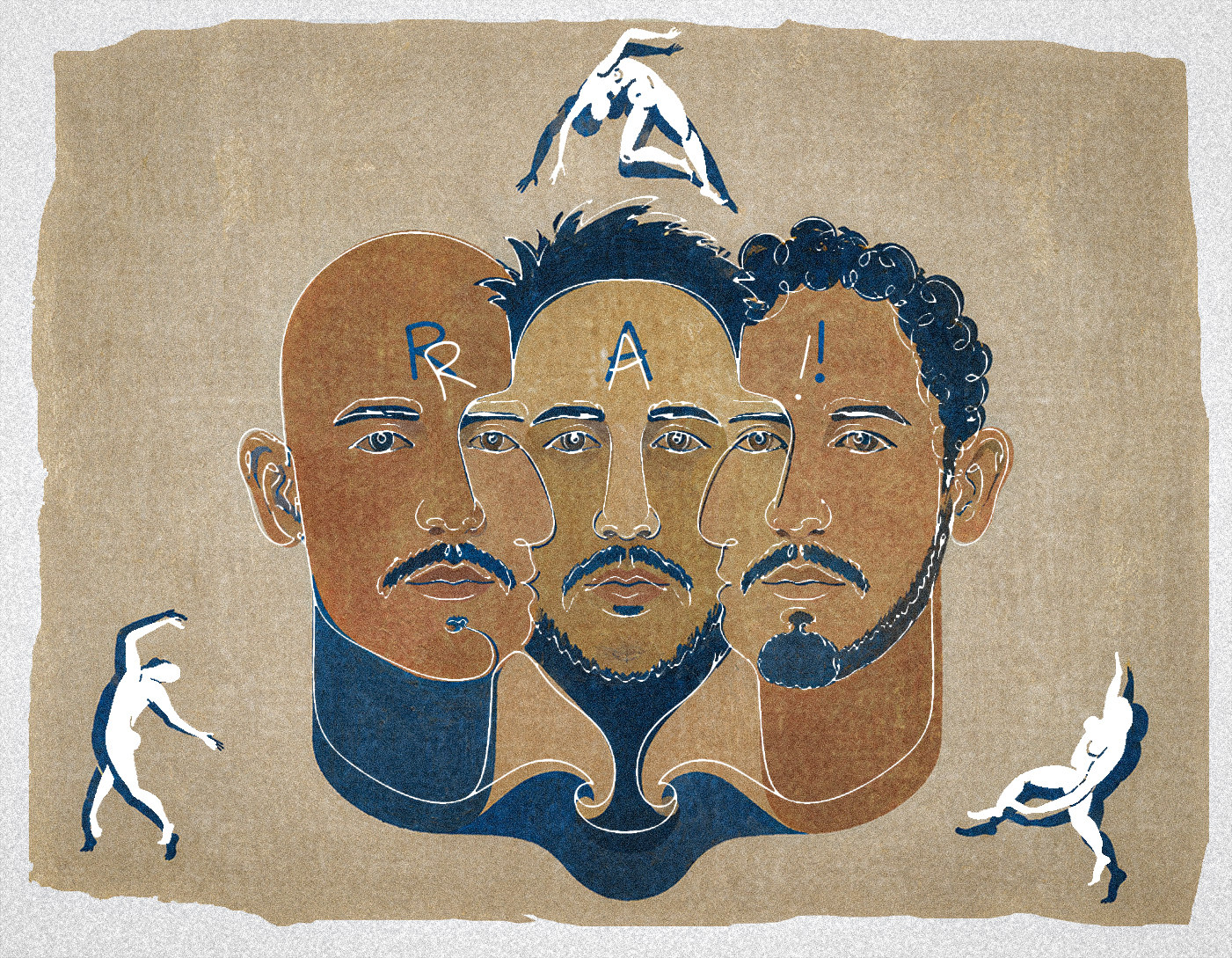
I have begun to see it as a portrait of three people.
To me, Santiago has always been the R.
Perhaps because he was the first among us. The oldest.
But also because he possesses a calmness that often holds the rest of us together.
It is very difficult to see him angry.
If you arrive at the office on any given day, you will probably find him focused, wearing headphones in front of a drawing. Painting with watercolors. Reviewing a plan again and again. Returning to the same detail until he is convinced.
Some architects need to speak in order to think.
Santiago needs to draw.
Pedro, on the other hand, has always seemed like the A to me.
Not because of the letter itself, but because when I think of the logo, I inevitably imagine it connecting the R with the exclamation mark.
That is what he does every day.
Many times I am reviewing a project when he appears to ask what I think about a decision. A little while later, I see him sitting with Santiago, talking about exactly the same subject. If he feels it is necessary, he calls a meeting. If a conversation was left unfinished, he returns to it days later.
He has a rare ability to turn a decision into a conversation.
There is one detail that has always seemed revealing to me.
I imagined that one day I would have a studio with my brother.
Santiago imagined one with Pedro.
And Pedro, somehow, always ended up imagining the three of us together.
He connects.
He also enjoys building bridges beyond the studio. With academia, with the profession, and with other architects. When we decided to publish our first book, all three of us participated, but it was Pedro who carried the project forward with admirable discipline. He is enthusiastic about creating community because he understands that architecture is also built through conversation.
Then there is the exclamation mark.
For a long time, I thought it represented only the spirit of the studio.
Today, I suspect that, without intending to, it also ended up resembling me a little.
While Santiago draws and Pedro keeps a conversation open, I am probably walking through the office, reviewing a project, visiting a construction site, writing down an idea, talking with a client, or wondering how we might improve some part of the practice.
I have always had the feeling that things can be improved a little more. I find it difficult to settle for a solution when I sense that another possibility still exists.
Perhaps that is why I tend to make decisions more quickly than Pedro and Santiago.
They are more cautious.
I am more daring.
I have never been too afraid of making mistakes.
I am far more concerned about the possibility of not having tried.
More than once, that difference has allowed us to discover opportunities that, had we waited too long, would simply have disappeared.
And just as many times, they have been the ones who forced me to stop.
To look again.
To give an idea time before running off after the next one.
It is not always easy for me.
But I almost always end up being grateful for it.
They have taught me that moving forward does not always mean running.
And I hope I have shown them that, from time to time, it is also worth taking the first step before having all the answers.
That is why I have never felt that the exclamation mark represents only intensity.
To me, it represents movement.
The need to make things happen.
To try.
To make mistakes.
To begin again.
I suppose that has always been my way of occupying a place within the studio.
Not by trying to do the same things they do.
But by trying to push, whenever necessary, the next conversation, the next project, or the next idea.
For years, I thought that restlessness might be a flaw.
Over time, I understood that I simply needed to work with people who were different from me.
And that has been one of the greatest fortunes of my life.
I could not have chosen better partners.
What I admire most about Pedro and Santiago has nothing to do with architecture.
It has to do with the kind of people they chose to become.
They are upright, generous, and deeply human people. Many times, I have seen them put others before themselves. Over the years, I understood that those qualities end up shaping an office far more than any talent for designing buildings.
When we founded RA!, I was the youngest.
They were six years older than me.
That may seem like a small difference.
It is not when one person has just graduated from university and the others have already traveled a good stretch of the road.
At first, I arrived with many ideas and enormous confidence in them.
They had more experience.
I had fewer years, not less conviction.
Many times, that experience allowed them to see things I still could not understand.
Other times, I was the one who insisted on an idea that eventually convinced all three of us.
It was never about one of us always being right.
Over time, we stopped arguing from the standpoint of age and began arguing from the standpoint of ideas.
Today, we argue from the same place.
Not because we think alike.
But because we learned to trust one another's judgment.
The best decisions almost never belong to a single person.
They are the result of long conversations, honest disagreements, and enough trust to change one's mind when someone finds a better solution.
RA! has never belonged only to the three of us.
Over time, that way of working also extended to the rest of the studio.
The final decisions are still ours, but many of our best projects also exist thanks to the ideas of the people who work with us.
Over time, we came to understand that a good studio is not built by surrounding oneself with people who think alike, but with people capable of enriching an idea, questioning it, and taking it farther than we could have reached on our own.
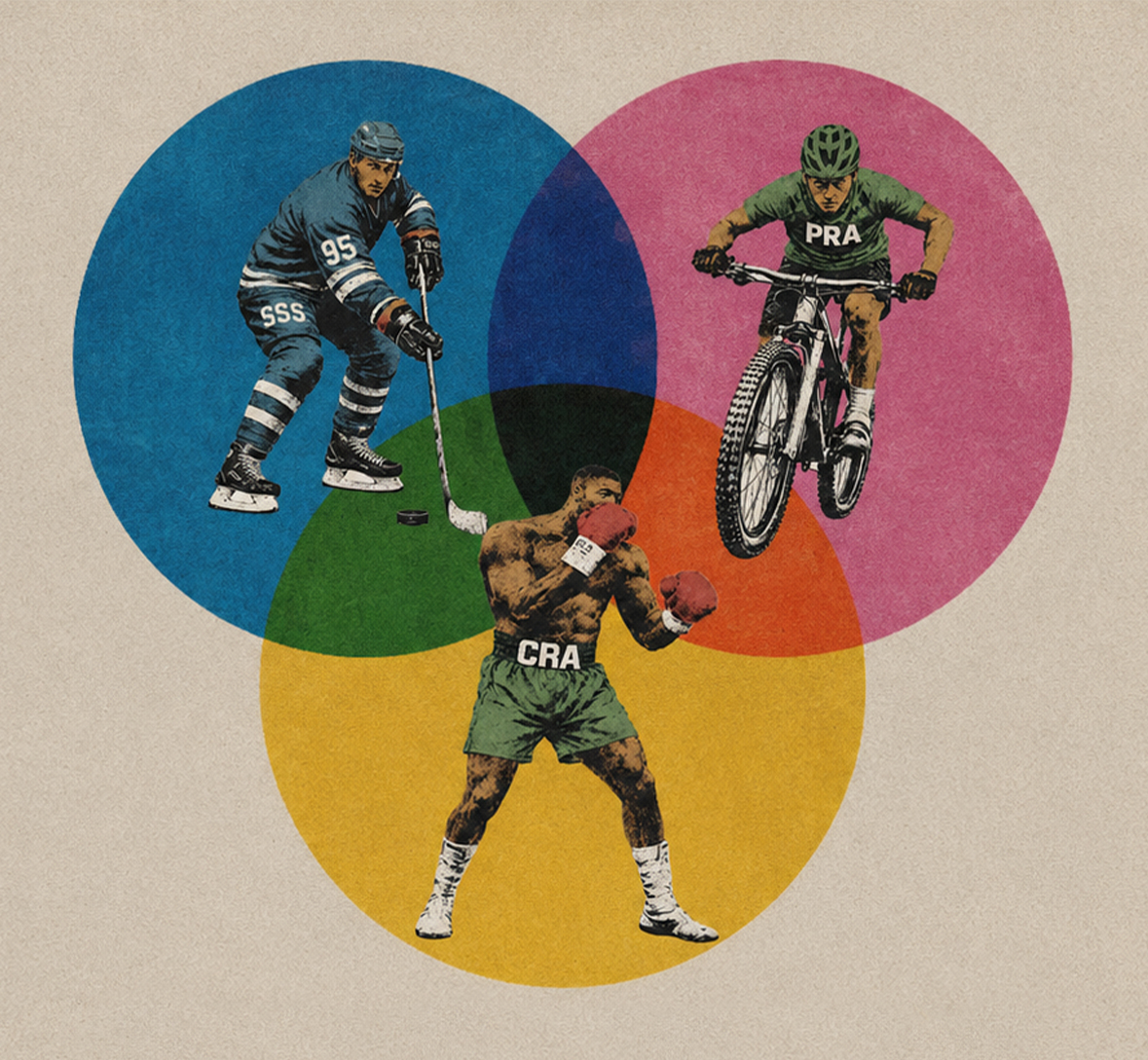
All three of us like to draw.
But we draw differently.
Santiago tends to lose himself in watercolors.
Pedro prefers pencil.
I have been using the same black Japanese Zebra marker for years.
Perhaps that is also why we enjoy different parts of the profession.
And yet, when those differences come together, something appears that none of us could build alone.
Perhaps that is why the name still feels right after so many years.
At first, it was little more than a play on two surnames that ended up becoming a cheer.
Today, when I see those three characters, I no longer think of a logo.
I think of a conversation that has gone on for almost a decade without ending.
I think of the enormous luck of working every day with my brother and with someone who, long ago, stopped being merely a partner and became family.
When someone asks me again what RA! means, I still give the same answer.
A play on two surnames.
A Mexican cheer.
But that is only the story of the name.
What RA! truly means is not written in a logo.
It lies in three people who, after so many years, continue choosing to share the same studio, convinced that a good idea almost always improves when it passes through someone else's hands.