Entre el mole y el nigiri
For years, I repeated, almost as a reflex, that New York was my favorite city in the world.
And, to be fair, it still holds a privileged place on that list.
It fascinated me as an architect. It fascinated me as a human phenomenon. It fascinated me as that rare combination of geography, technology, and economics which, when they come together at precisely the right moment, produces something that seems inevitable once it exists, but which, before existing, seemed impossible.
Think about Manhattan.
A relatively small island, pressed between the Hudson and the East River, forced to solve an elemental problem: what happens when millions of people want to occupy a space that simply cannot expand?
The answer was as simple as it was revolutionary.
Grow upward.
And just when the need appeared, the tool appeared as well. The elevator did for the modern city what the sail did for the oceans or the printing press for ideas: it changed the rules of the game without making too much noise.
What followed was a kind of vertical delirium.
Buildings began to compete with the sky. Skyscrapers transformed the skyline into a permanent declaration of ambition. New York became a laboratory where humanity experimented with a new way of inhabiting the world.
For a long time, I thought that this was where one of architecture's most extraordinary expressions could be found.
Until I visited Tokyo.
And then the question changed.
New York spoke to me about what we are capable of building.
Tokyo forced me to ask who we are when we build.
Because the impression Japan leaves goes far beyond its buildings.
It is the feeling—at least for someone educated in the West and raised in Mexico—of coming into contact with a different logic. Not better or worse. Different.
Quieter.
More orderly.
More disciplined.
More restrained.
And, paradoxically, at certain moments also lonelier.
I have often thought that Japan and Mexico function as a kind of inverted mirror. Where one privileges collective harmony, the other celebrates creative disorder. Where one cultivates reserve, the other practices social interaction almost as a national sport.
Perhaps that is why Japan exerts such a powerful fascination over us.
It allows us to observe who we are through what we are not.
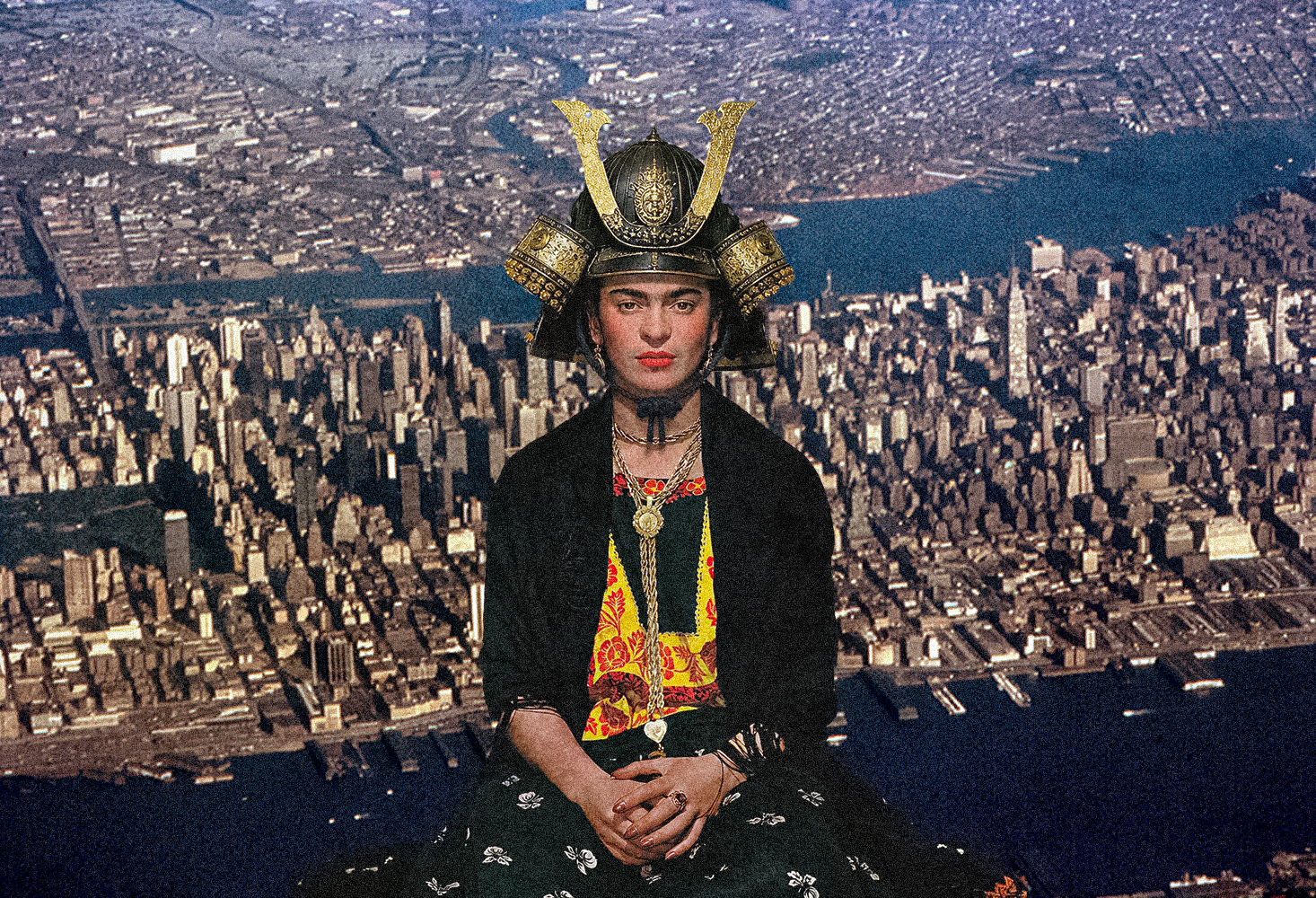
I have been fortunate enough to travel to Japan twice and visit different regions of the country. Enough to admire it. Not enough to understand it.
And the more I know it, the less I feel I understand it.
Each trip answers a few questions and multiplies ten others.
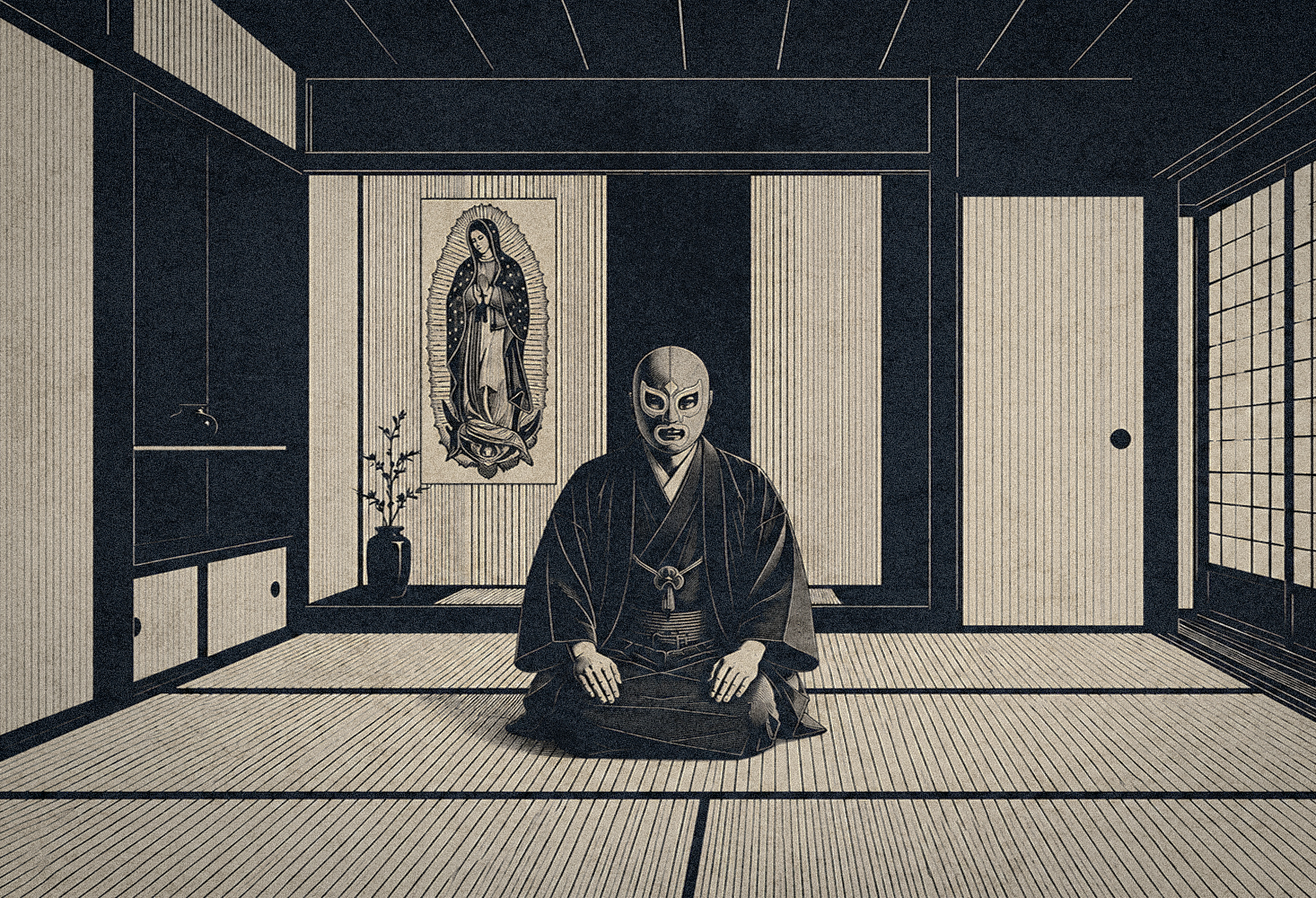
It was precisely after those visits that I decided to reread In Praise of Shadows, by Jun’ichirō Tanizaki.
The first time I read it was at university.
I thought I had understood it.
Now I suspect I had simply read it.
Because returning to it years later—after practicing architecture, building projects, making mistakes, and confronting the profession's inevitable contradictions—was like opening a completely different book.
Or perhaps the book was the same, and I was the one who had changed.
The curious thing is that, as I moved through its pages, I thought less and less about Japan and more and more about Mexico.
At first glance, Tanizaki writes about architecture.
He writes about temples.
About tea houses.
About gardens.
About traditional bathrooms.
About materials.
About light.
But little by little, one discovers that he is actually talking about something else.
He is talking about values.
Shadow is a value.
Darkness is a value.
Patience is a value.
Contemplation is a value.
Privacy is a value.
Acceptance of the passage of time is a value.
In the West, we tend to interpret wear as a defeat. Aged wood must be restored. Rusted metal must be replaced. A surface marked by the years must be concealed.
Tanizaki looks at those same traces and sees beauty.
Where we see deterioration, he finds depth.
Where we try to stop time, he seems to invite it to sit at the table.
It is a subtle difference, but an enormous one.
Like looking at a scar and seeing it either as an imperfection or as part of a story.
Something similar happens with light.
Modernity developed an almost religious obsession with illuminating everything. Leaving no dark corners. Allowing no secrets. Making every centimeter of space visible.
Tanizaki proposes exactly the opposite.
Dimness is not absence.
It is presence.
It is the setting where materials acquire emotional depth. Where objects suggest more than they reveal. Where mystery survives.
Perhaps that is why Japanese temples move us.
Perhaps that is why the gardens do.
Perhaps that is why even the bathrooms do.
There is a particularly memorable passage in which he describes traditional Japanese bathrooms, isolated from everyday noise and visually connected to nature. What for many would be a domestic function becomes a ritual.
It is not hygiene.
It is contemplation.
And then a question appeared that never left me.
If those architectural decisions arise from certain cultural values, what are ours?
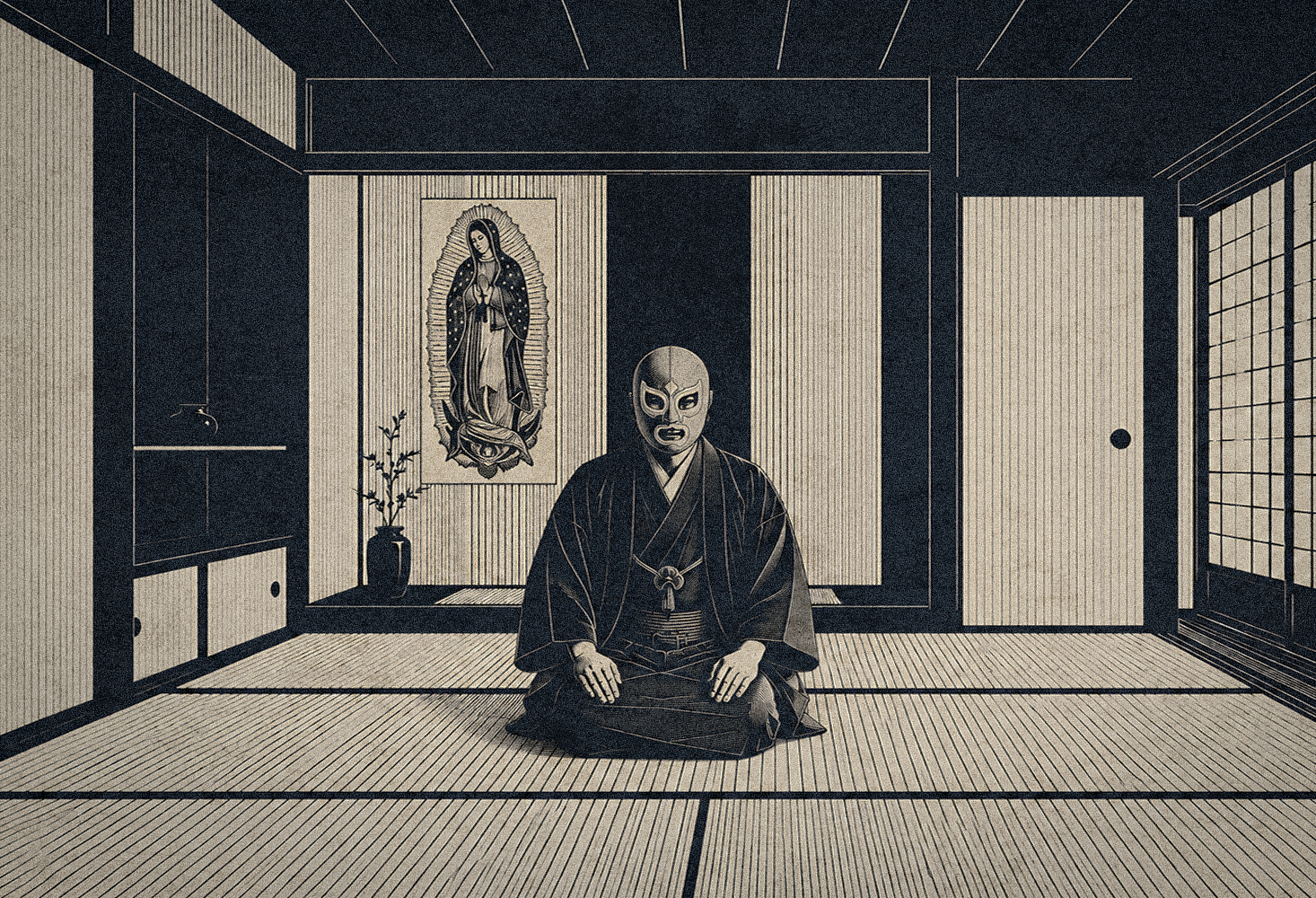
What values should shape a Mexican architecture?
The question seems simple.
It is not.
Because identifying Japanese architecture is relatively easy. There are changes, nuances, and regional differences, of course, but also a cultural continuity that extends across centuries.
Mexico, by contrast, seems like an endless conversation.
Is Maya architecture Mexican?
Mexica architecture?
Zapotec architecture?
Viceregal architecture?
The architecture of the Porfiriato?
Art Deco?
Modernism?
Barragán?
The more one tries to define it, the more it slips away.
And perhaps the reason is obvious.
Mexico was never a single thing.
Before the arrival of the Spanish, the land we now call Mexico was already a mosaic of Mesoamerican peoples, each with their own languages, beliefs, and ways of understanding the world.
Then came the Spanish, many of them from Andalusia and Extremadura. With them, not only a language and a religion crossed the Atlantic, but also a way of inhabiting shaped by centuries of Roman, Islamic, and Berber legacies.
Later came people of African origin who, despite having been brought by force, left a profound mark on the music, food, trades, and everyday life of New Spain.
The story did not end there either.
For more than two centuries, the Manila Galleon connected the Philippines with Acapulco. It carried not only silk, porcelain, and spices; people, plants, words, techniques, and ideas also crossed the Pacific and eventually became part of everyday life in the viceroyalty.
Long before globalization existed, Mexico was already a meeting point between the Americas, Europe, Africa, and Asia.
Perhaps that is why our history resembles less a straight line than the confluence of many rivers: currents born in different places that eventually met here.
That is why the obsession with finding a pure Mexican essence seems so strange.
Purity, in our case, may be a fiction.
We are a mestizo culture from the foundations up.
And perhaps the best way to understand this is not through architecture, but through food.
Think about a taco al pastor.
The tortilla comes from this land.
The pig arrived from Europe.
The vertical-spit technique has roots connected to the Middle East.
And yet, no one questions its Mexicanness.
Because identity does not depend on the origin of each ingredient.
It depends on where the synthesis takes place.
The taco al pastor is Mexican because the mixture happened here.
Because the transformation happened here.
Because the culture took diverse elements and turned them into something unrepeatable.
Then another question arises.
Why does Mexican cuisine possess such a clear identity while Mexican architecture remains an open debate?
Perhaps because we have spent too much time searching for forms and too little identifying values.
That is why Barragán remains so relevant.
Not because he discovered a definitive aesthetic formula.
But because he understood something deeper.
He understood that an architectural identity is not born from copying the past.
It is born from reinterpreting it.
He took modern and universal tools, but mixed them with something profoundly local: light, color, walls, courtyards, and silence. His spaces are not archaeology.
They are translation.
They are a conversation between tradition and modernity.
And perhaps an important clue can be found there.
I am less and less interested in discovering the form of Mexican architecture.
I am more interested in discovering the values that might give rise to it.
That is why I constantly return to Indigenous peoples.
Not to replicate pyramids.
Not to turn history into decoration.
But to understand what knowledge was buried beneath centuries of modernization.
How did they understand territory?
How did they understand time?
How did they understand community?
How did they understand the relationship between human beings and nature?
I suspect that there are still answers there that we have not finished listening to.
Not to reconstruct the past.
But to imagine the future.
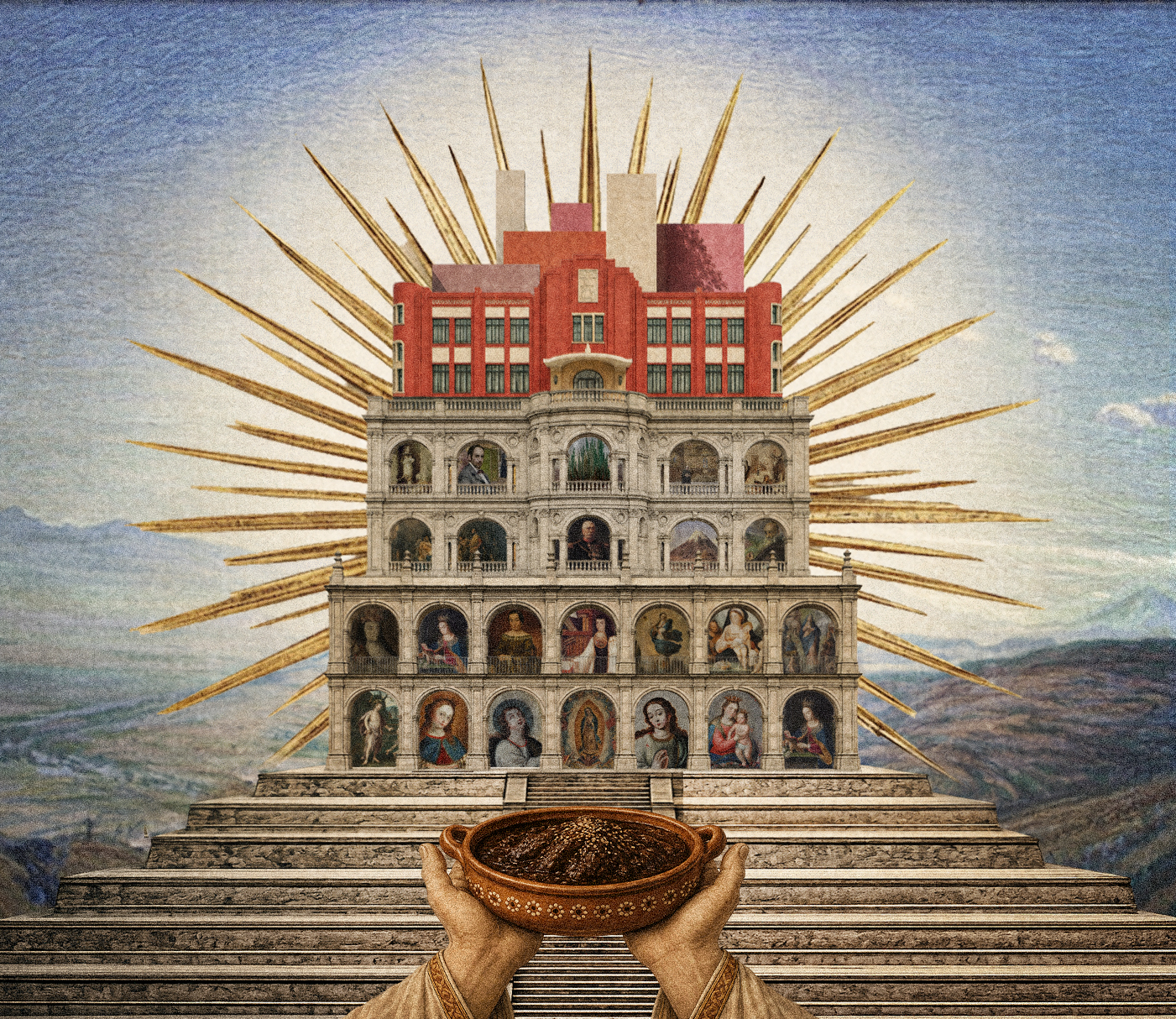
Sometimes I think Mexico is to mole what Japan is to nigiri.
Nigiri possesses an almost mathematical elegance. Few ingredients. Nothing is superfluous. Everything seems inevitable.
Mole, by contrast, is a multitude turned into unity. Layer upon layer of histories, migrations, techniques, and memories that ultimately fuse together until it becomes impossible to separate their components.
Perhaps Mexico is that.
A complexity that refuses to be simplified.
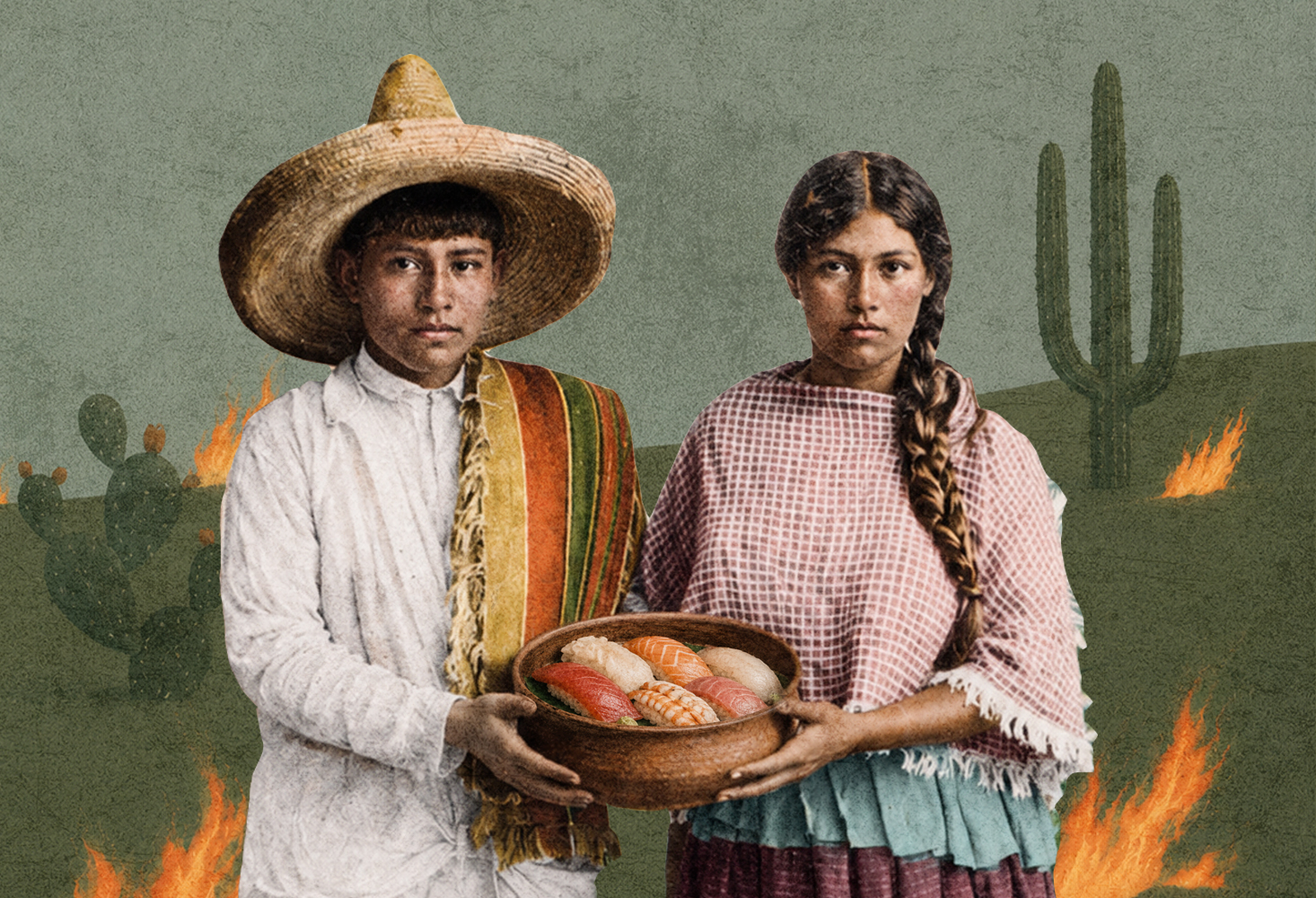
And yet, I still wonder whether beneath all those layers there is something more essential. Something we still sense, but do not yet know how to name.
I do not know whether our task is to accept that we are mole.
Or to discover the Mexican nigiri.
I do not know whether Mexican architecture needs to find a form, a sensibility, or a shared worldview.
The only thing I know is that rereading Tanizaki ended up bringing me much closer to Mexico than to Japan.
And I suspect that Mexican architecture has spent centuries asking itself exactly the same question.
A question that remains open.
And perhaps, precisely for that reason, remains so interesting.