The Generosity of a Bench
Lately, I have been hearing a great deal about generosity in architecture.
The word appears with increasing frequency in lectures, interviews, and conversations among architects I admire. I have heard it in reflections by Michel Rojkind. I recently heard it in a talk by Bjarke Ingels about the future of architecture and urban development in New York, where he offered a recommendation to Zohran Mamdani, the current mayor of New York City. Among the different subjects he addressed, he returned again and again to an idea that especially caught my attention: the need to think about the city through generosity. And although each of them seems to refer to slightly different things, the feeling I am left with is the same: there is something important behind that word.
I am not sure I understand it completely.
And perhaps that is why I keep thinking about it.
Because words we understand too quickly tend to become exhausted just as quickly. Others, however, remain in our minds for weeks or months, finding unexpected connections with experiences, projects, and memories that seem, at first, to have nothing to do with one another.
Generosity has become one of those words for me.
For years, much of the architectural conversation centered on concepts such as sustainability, energy efficiency, resilience, or urban densification. All of them are important subjects. All of them will continue to be necessary.
But generosity seems to pose a different question.
It does not ask only how to reduce a building's impact.
It asks what it can contribute.
And that difference, however small it may seem, completely changes the conversation.
Before continuing, I think it is worth remembering something that is fundamental to me.
Architecture is, before anything else, a human act.
We build to inhabit.
We build to protect ourselves.
We build to rest.
We build to gather.
We build to give physical form to a part of our existence.
A building can solve structural problems, optimize consumption, or respond to complex climatic variables. But it can also offer shelter, intimacy, belonging, or that difficult-to-describe feeling that appears when a space seems to understand us better than we understand ourselves.
That is why architecture has always seemed to me to operate simultaneously at two scales.
One deeply intimate.
And another inevitably collective.
On one side is the house.
The room.
The window through which the morning light enters.
The shade where someone drinks coffee before beginning the day.
On the other side is the city.
That enormous collective construction where millions of individual decisions end up producing a shared experience.
As I write this, an idea I heard during university comes to mind. Sadly, I do not remember which professor mentioned it. I would love to remember. It must have been during the first or second semester of the degree, but honestly, I do not recall clearly.
What I do remember is that this professor spoke about Richard Sennett and explained an idea that has stayed with me ever since: the city is the common place of those who have nothing in common.
It was not a direct quotation from Sennett. It was more an interpretation of his thought. But over the years, it has seemed to me an extraordinary idea.
Because that is precisely what the city is.
The place where people with different histories, different resources, different beliefs, and different ways of understanding the world coexist.
And yet, we share the same streets.
The same sidewalks.
The same parks.
The same transportation systems.
The same problems.
And also the same opportunities.
Few human creations seem as fascinating to me as this permanent coexistence among strangers.
And perhaps generosity appears precisely at the point where the intimate scale and the collective scale meet.
When I began thinking about this subject, I realized that there are at least two different ways of understanding architectural generosity.
The first has to do with resources.
With what we consume and what we give back.
I think about water.
I think about energy.
I think about waste.
I think about all that invisible infrastructure that sustains urban life and that we normally notice only when it stops working.
For decades, we have designed buildings that operate mainly as consumers. They receive water, receive energy, produce waste, and delegate the consequences to larger systems that are rarely part of the architectural conversation.
But as cities grow, that logic begins to reveal its limits.
And then an interesting question arises.
What would happen if buildings began to behave less like consumers and more like collaborators?
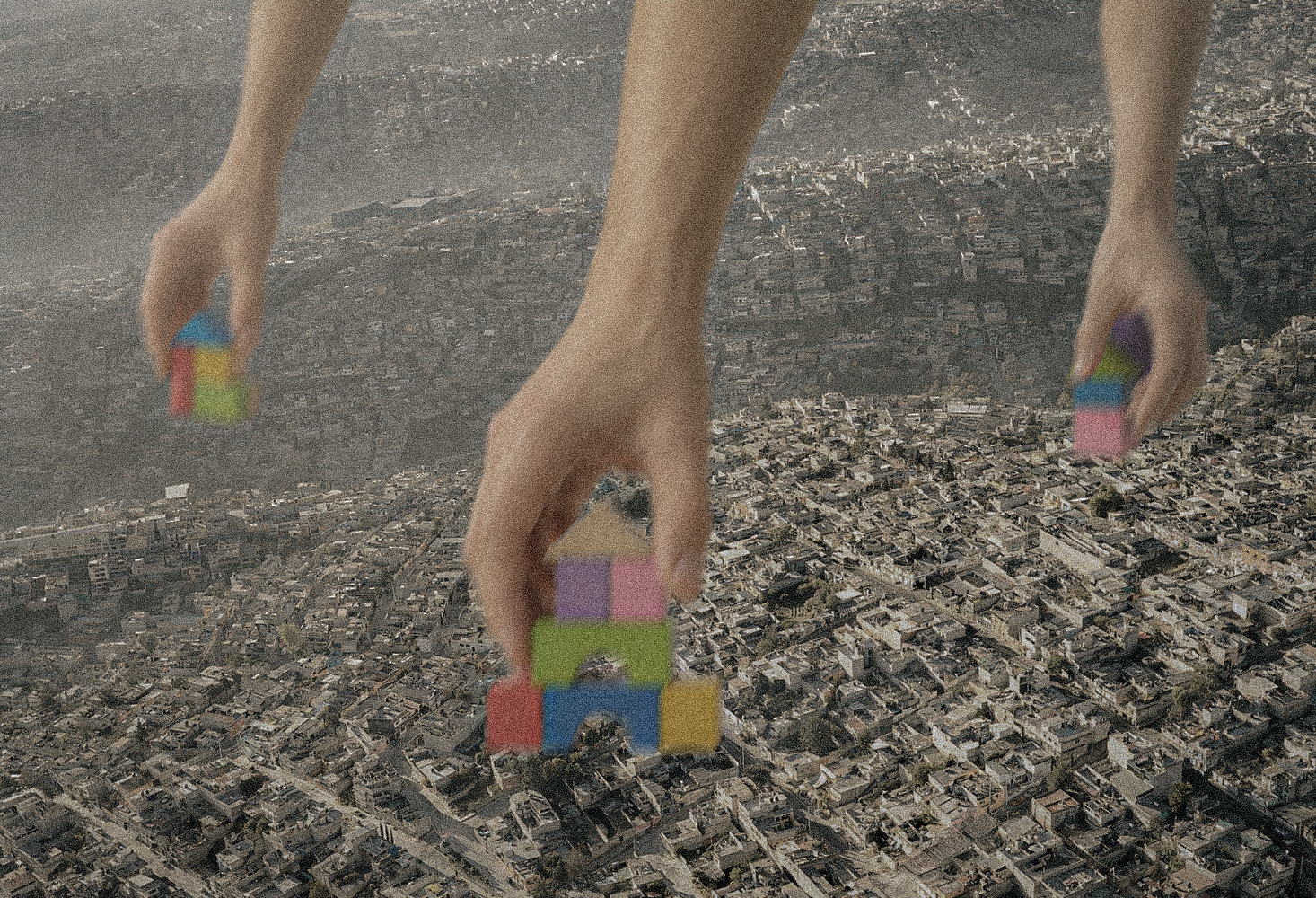
I am not talking about completely self-sufficient technological fantasies.
Nor about small ecological fortresses isolated from the world.
I am talking about something simpler.
More realistic.
More attainable.
Buildings capable of collecting rainwater.
Of producing part of the energy they use.
Of reducing pressure on infrastructure that is already operating at its limit.
Of taking responsibility within the urban ecosystem of which they are a part.
I inevitably think about Mexico City.
An extraordinary and exhausting city at the same time.
Vibrant.
Unequal.
Creative.
Chaotic.
A city where problems seem to grow at the same pace as opportunities.
It would be naive to think that architecture alone will solve hydraulic, energy, or environmental challenges of such magnitude.
But it would also be far too convenient a surrender to assume that it has nothing to contribute.
Architecture can test possibilities.
It can move conversations forward.
It can demonstrate that certain ideas work before regulations require them.
And I suspect that many of the transformations we will need in the future will depend precisely on that collaboration among architects, urban planners, engineers, citizens, and governments.
However, the more I thought about all of this, the more evident it became that infrastructure was only one part of the story.
Perhaps not even the most important one.
Because there is another form of generosity that interests me even more.
Spatial generosity.
Human generosity.
The kind that is not measured in liters or kilowatts.
The kind that is measured in encounters.
Some years ago, one of my professors, Rodrigo Velasco, constantly spoke about a bench.
Not a museum.
Not a tower.
Not a work intended to appear on magazine covers.
A bench.
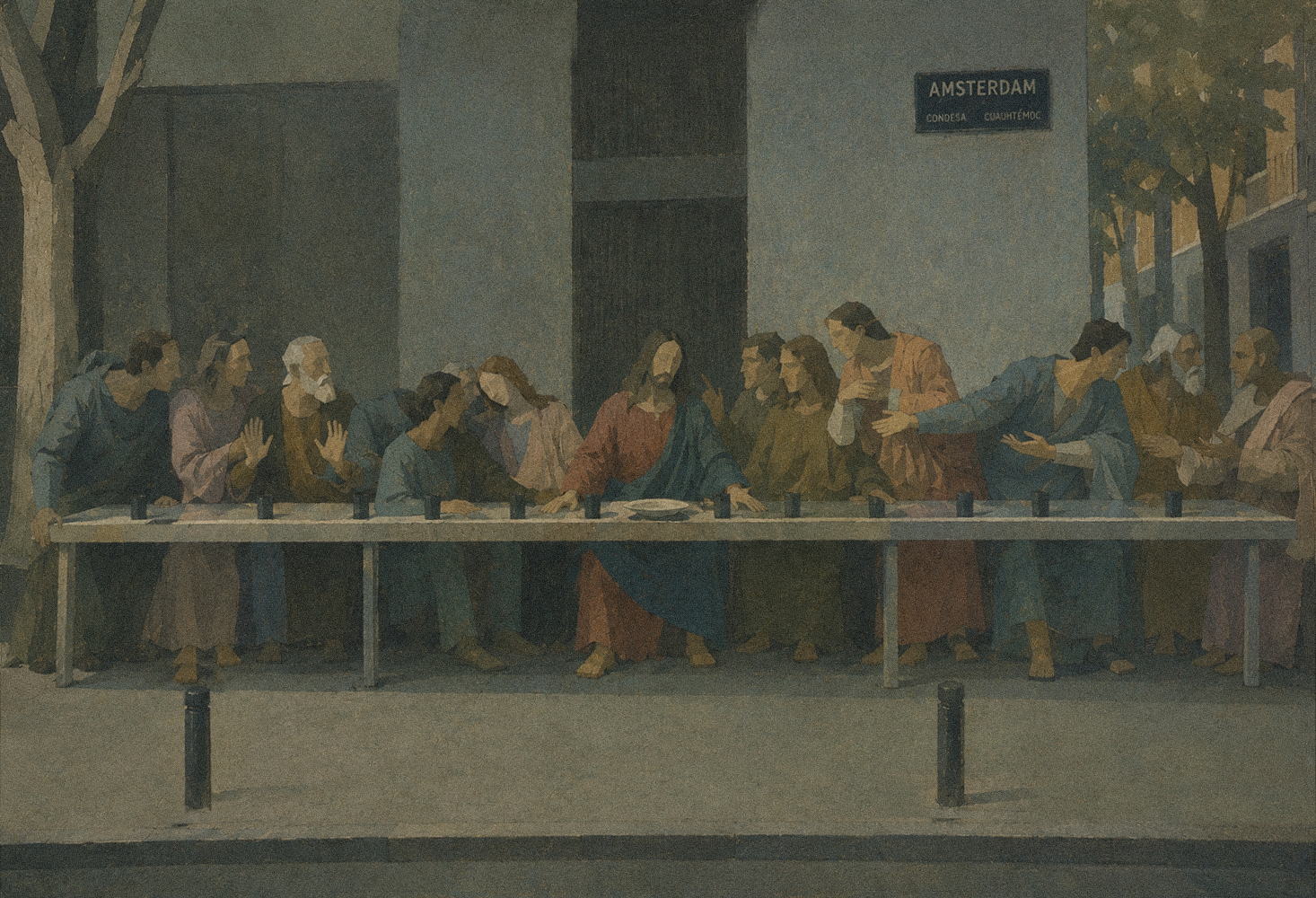
It was part of a building by Isaac Broid on Amsterdam Avenue, in Condesa.
Rodrigo has his office there and would repeat an observation that seemed curious to me at the time and now seems profoundly revealing: one of the best things about working in that space was precisely that bench.
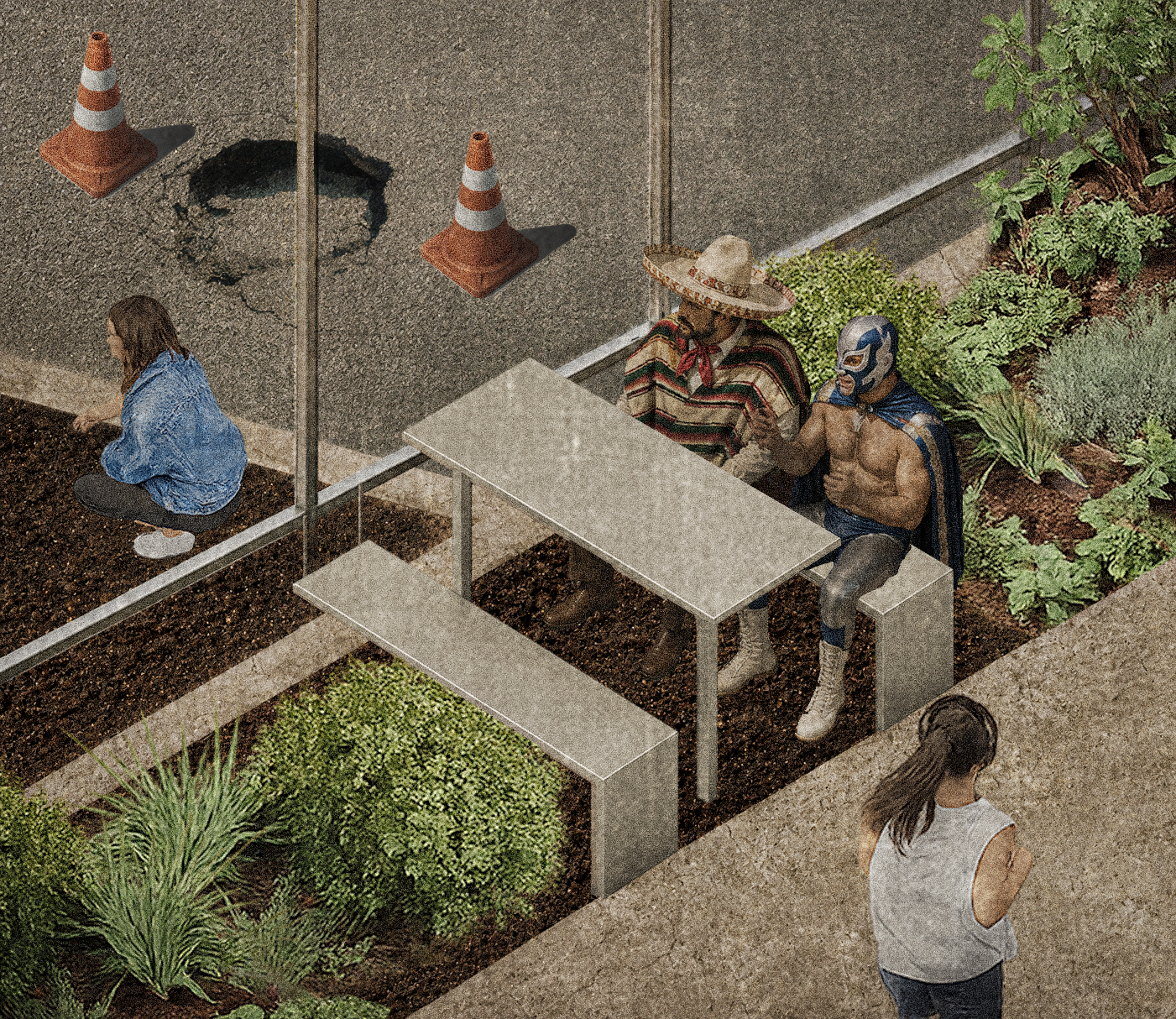
A metal canopy sloped gently downward until it became a place to sit.
There was a table.
Two benches facing each other.
Nothing spectacular.
Nothing heroic.
And yet, it was always occupied.
Someone drank coffee.
Someone waited for a friend.
Someone sketched.
Someone talked.
It was a tiny space within the city, but it produced something enormous: opportunities for coexistence.
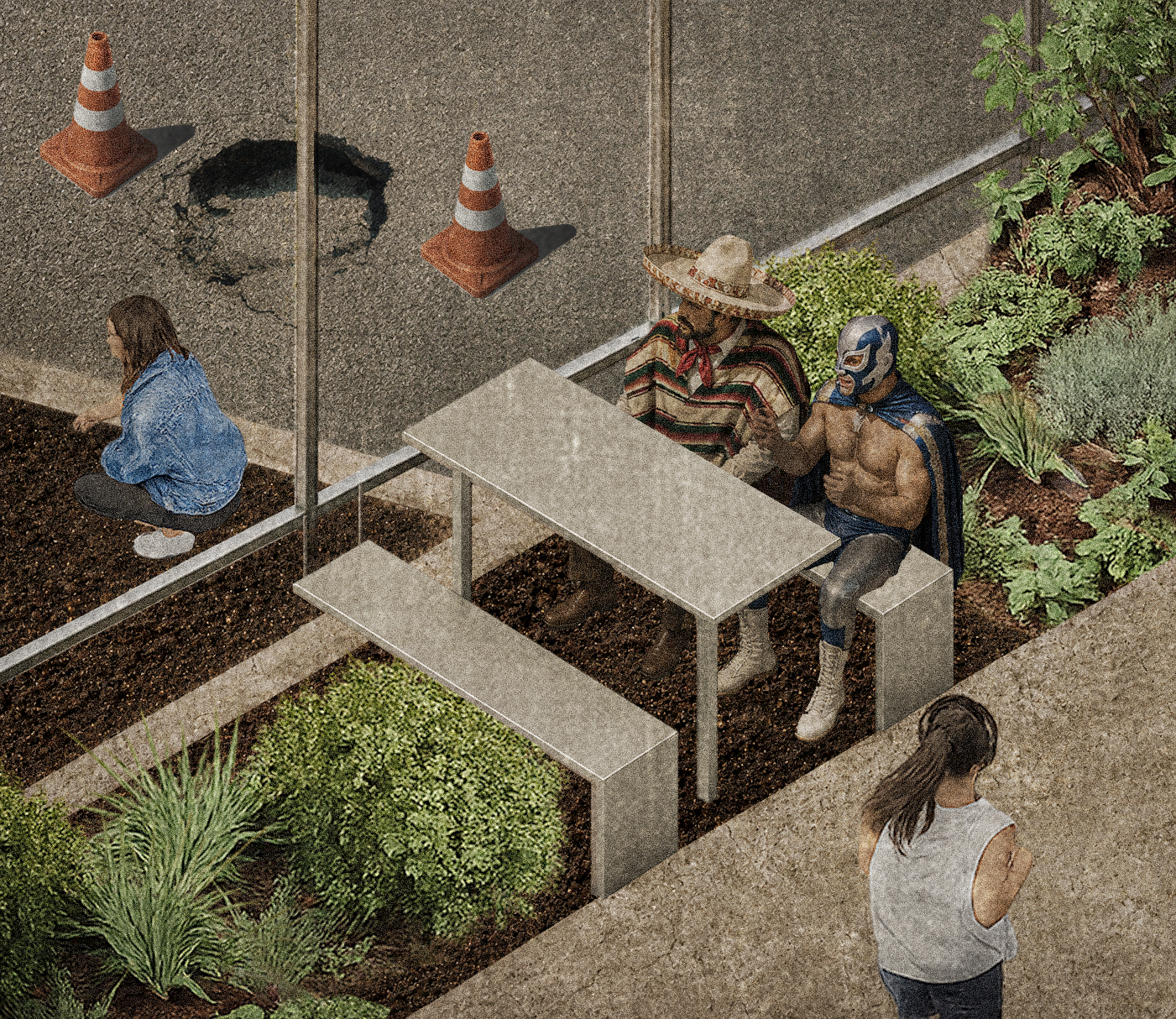
Just a few days ago, the City Government dismantled it. I remember the sadness I felt when I found out.
Not because a complex piece of architecture had disappeared.
But because a possibility had disappeared.
And urban possibilities, once lost, are often much harder to rebuild than the buildings themselves.
Perhaps that is why I often wonder how many similar places we have gradually eliminated in the name of efficiency, or through ignorance and incompetence.
We live in a curious time.
Everything seems to require a function, a metric, or an economic justification.
Even remaining in a place often demands a transaction.
Consuming something.
Buying something.
Justifying our presence.
And yet, one of the most generous things a city can do is simply allow us to be.
That is why I suspect that one of architecture's most important responsibilities is to create settings where human relationships can happen.
We cannot design friendships.
We cannot design affection.
We cannot design communities.
But we can design the conditions that make them possible.
The plazas.
The courtyards.
The corridors.
The shared terraces.
The in-between spaces or the benches.
Collective housing also offers an extraordinary opportunity for this.
For years, it seemed that the ideal was to arrive at the parking garage, take the elevator, and immediately disappear behind a private door.
Everything optimized.
Everything efficient.
Everything individual.
But something is lost when we eliminate the spaces where neighbors can run into one another by chance.
And few urban forces are as powerful as chance.
Something similar happens with mixed uses.
I have always thought that ground-floor businesses do much more than generate economic activity.
They generate city.
The café.
The bookstore.
The neighborhood restaurant.
The corner store.
They are seemingly small pieces, but they function as invisible seams that hold the urban fabric together.
And as I write this, I inevitably think about one of our recent projects: Laiva, in San José del Cabo.
The initial brief was clear.
Develop a hotel while maximizing the possible number of rooms.
A perfectly reasonable logic from a commercial perspective.
But during the process, a different question emerged.
What could this building offer the city?
San José del Cabo retains a quality that is becoming increasingly scarce.
An active urban life at a human scale.
Its streets still invite people to walk.
Its spaces retain an identity of their own, made of color, shade, and spontaneous encounters.
Little by little, we managed to convince the client to free up part of the ground floor.
To open spaces.
To allow the building to breathe.
The project was set back to create a shaded atrium, a gentle transition between the street and the interior.
We initially imagined it as a space for galleries.
Later, a café and a restaurant appeared.
And, curiously, that turned out even better.
Because those places still belong to the city.
You do not need to stay at the hotel to use them.
There is no invisible boundary between tourists and residents.
People can enter.
Walk through.
Sit.
Stay.
Inhabit.
Looking back, I realize that we never explicitly used the word generosity during the design process.
I do not remember saying it in any meeting.
And yet, that was exactly what we were trying to do.
Give something up.
Share something.
Open something.
Perhaps that is where the most interesting aspect of this conversation lies.
Architectural generosity does not always appear in grand gestures.
It often manifests itself in seemingly small things.
A bench.
Shade.
A courtyard.
An open ground floor.
A water collection system.
A place where two strangers can coincide for a few minutes before continuing on their separate paths.
Because buildings do not end at their façades.
They are part of a street.
Of a neighborhood.
Of a community.
Of a city.
And if the city is that shared place among people who often have nothing in common, then architecture has a task that goes beyond construction.
To help us live together within that difference.
Perhaps the most important question for the architecture of the coming decades is not only how to build better.
Perhaps it is another one.
How can we give back more than we take?
Sometimes through infrastructure.
Sometimes through space.
And, in the best cases, through both at the same time.