The Californian Mirror
The first time I watched The Godfather was because of my curiosity.
Or perhaps thanks to it.
I remember the weekend trips to Cuernavaca to visit my grandparents. Today, that journey seems relatively short to me. When I was a child, it felt endless. I spent much of the way asking how much longer it would take to arrive and looking for anything that might make the road more interesting.
On one of those trips, my father began telling me the story of The Godfather.
I don't remember exactly how the subject came up. What I do remember is that he captured my attention immediately.
He told me about Vito Corleone.
About Michael.
About Sonny.
About Tom Hagen.
He wasn't describing a movie the way we usually describe them. He did it like someone telling a story he knew by heart. Like someone who enjoys retracing a familiar path.
I listened, fascinated.
And I asked questions.
Then I asked again.
And then I asked one more question.
I have always been that way.
An answer rarely satisfies me. Instead, it usually provokes another question.
My father kept explaining for quite a while. Until there came a moment when, surely tired of my interrogation, he said something that would end up changing far more than either of us imagined.
—If you ask me again, I'll put on the movie.
I'm almost certain he said it because he already wanted a little silence. For me to stop bothering him for a while.
I understood it exactly the other way around.
I understood it as a promise.
That if I kept insisting, I would watch it with him.
So I kept asking.
Several more times.
Enough to make sure he followed through.
We arrived at the house.
And we watched the movie.
To this day, I still think it was the first time I understood that cinema could be art.
Not because I understood its historical importance.
Not because I knew who Marlon Brando was.
Nor because I understood the place the film held in the history of cinema.
I simply felt that I was watching something different.
Something that didn't end when the credits appeared.
Something that stayed with you.
Curiously, one of the things I remember most about that first time has nothing to do with the Mafia.
Nor with the Corleones.
Not even with the iconic scene in which Sonny is riddled with bullets
It has to do with a house.
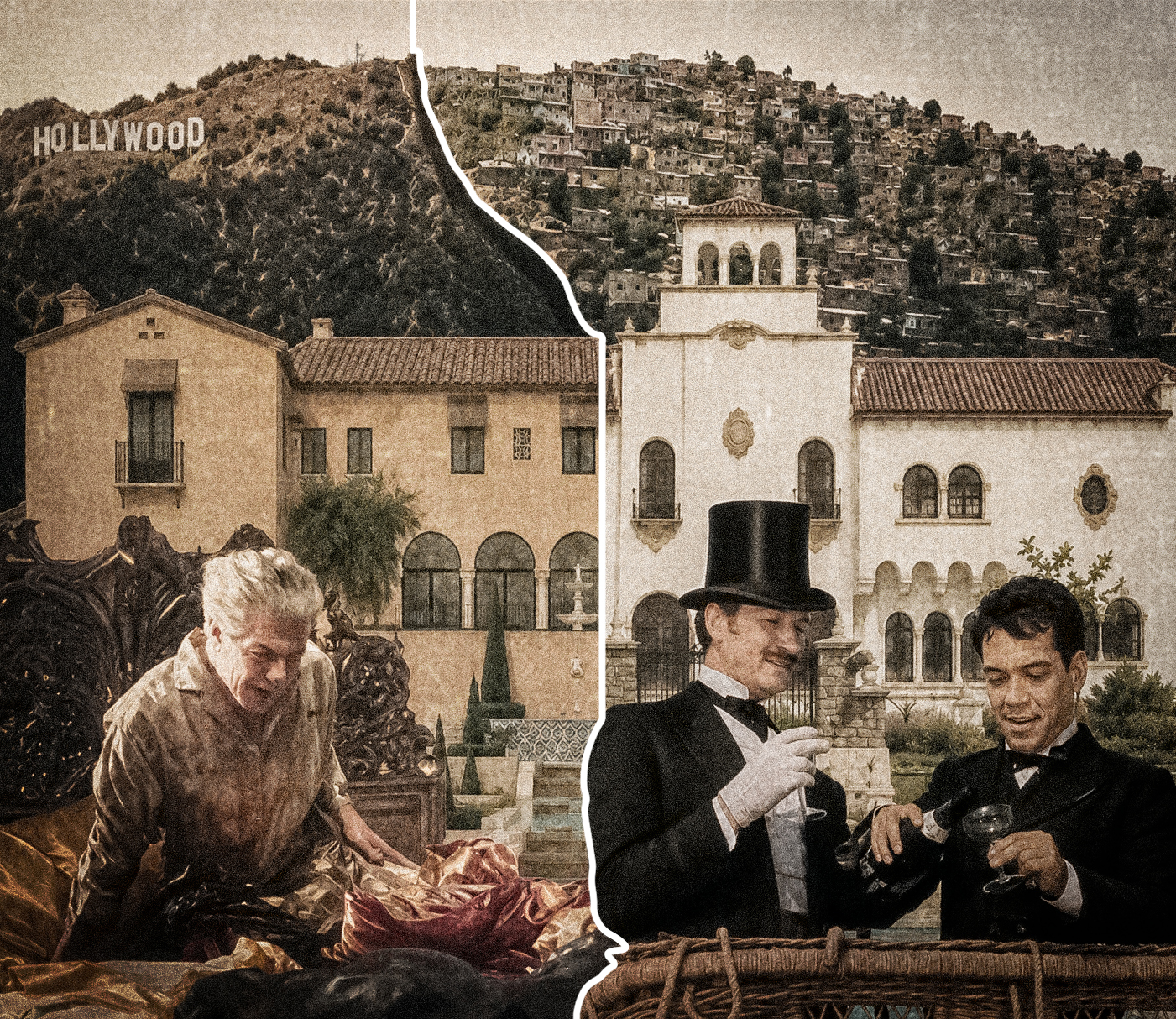
There is a scene in which Tom Hagen travels to Los Angeles to meet Jack Woltz, the powerful film producer who controls Johnny Fontane's fate. It is the same residence where one of the most famous scenes in film history takes place: the one in which Woltz wakes up and finds his horse's head in the bed.
But what impressed me wasn't the violence.
It was the architecture.
The house had stucco walls, tile roofs, courtyards, balconies, and an atmosphere that felt completely familiar to me.
I remember thinking something that, according to a child's logic, was perfectly reasonable:
When did they travel from New York to Mexico?
That house looked far too much like the ones I saw in Las Lomas.
Far too much like the ones I found in Polanco.
Far too much like those that formed part of my idea of what a Mexican house was.
Many years later, I discovered that the scene took place in Los Angeles.
And then a much more interesting question appeared.
Why did a Californian house look so Mexican?
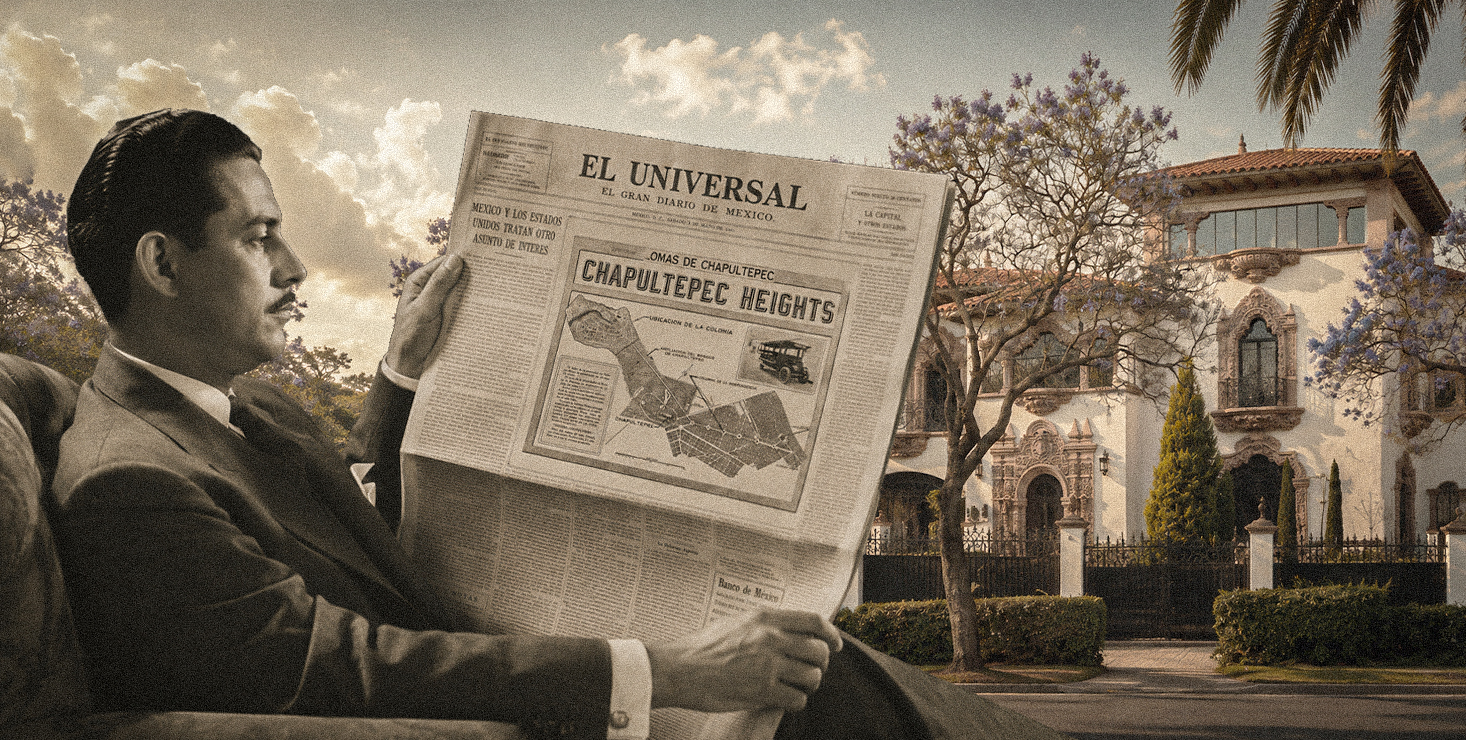
For years, I thought those houses were simply part of the national landscape.
They were there.
Like jacarandas.
And perhaps that is a perfect example of what I am trying to explain.
For years, I assumed jacarandas were a natural part of Mexico City's landscape. As if they had always been there. As if they were as Mexican as Paseo de la Emperatriz, now called Paseo de la Reforma, or Chapultepec.
Much later, I discovered that this wasn't true either.
Jacarandas arrived from South America thanks to Tatsugoro Matsumoto, a Japanese landscape designer who worked in Mexico during the first decades of the twentieth century. When President Pascual Ortiz Rubio wanted to fill the city with cherry trees in the style of Washington, Matsumoto explained that the capital's climate was not suitable for them and proposed an alternative: jacarandas, a species much better adapted to the city's conditions.
Today, it is difficult to imagine Mexico City without them.
But, like the Californian language, they are a reminder that many of the things we feel are most our own have histories far more complex than we imagine.
Over time, I discovered that those houses belonged to a very particular architectural language.
Neo-Californian.
California Colonial.
Spanish Colonial Revival.
Some even relate it to a modern reinterpretation of Mexican viceregal Baroque.
The names change depending on who tells the story.
The architecture remains.
And its history is far more fascinating than I imagined.
Because, in reality, it doesn't begin in California either.
It doesn't even begin in Mexico.
During the Porfiriato, Mexico's elites had their gaze fixed on Europe. A walk through the Roma or Juárez neighborhoods is enough to understand it. The grand residences of the late nineteenth century seemed to have a cultural compass pointing directly toward France.
Paris was the ideal.
The reference.
The model.
And there were historical reasons for it.
Mexico still lived under the shadow of a deep wound: the war against the United States and the loss of more than half its territory.
Europe represented sophistication.
The United States represented a recent defeat.
Then came the Revolution.
And with it appeared one of the great questions of twentieth-century Mexico:
What does it mean to be Mexican?
The question ran through painting, literature, music, and architecture as well.
The curious thing is that part of the answer returned from California.
The old Franciscan missions built during the viceregal period were still there long after the borders changed. At the beginning of the twentieth century, American architects and developers began to reinterpret those buildings.
They weren't trying to faithfully reproduce the past.
They were trying to build an identity for California.
That is how the movement known as Spanish Colonial Revival was born.
And this is where the story becomes particularly interesting.
Because this architecture had already made an enormous journey.
It had been born in Europe.
It had crossed the Atlantic.
It had found a new life in New Spain.
It had remained for centuries in territories that would later become California.
And finally, it had been reinterpreted as part of an American regional identity.
Then Hollywood appeared.
And Hollywood did what it knows how to do best.
It took an image and turned it into a collective imagination.
During the 1940s and 1950s, millions of people began to become familiar with courtyards, arcades, fountains, tiles, and residences inspired by the Hispanic tradition. Films such as The Mark of Zorro, Double Indemnity, Sunset Boulevard, or In a Lonely Place helped turn that architecture into something recognizable even to those who had never visited California.
The architecture traveled again.
This time not through ships or conquistadors.
It traveled through screens.
And eventually returned to Mexico.
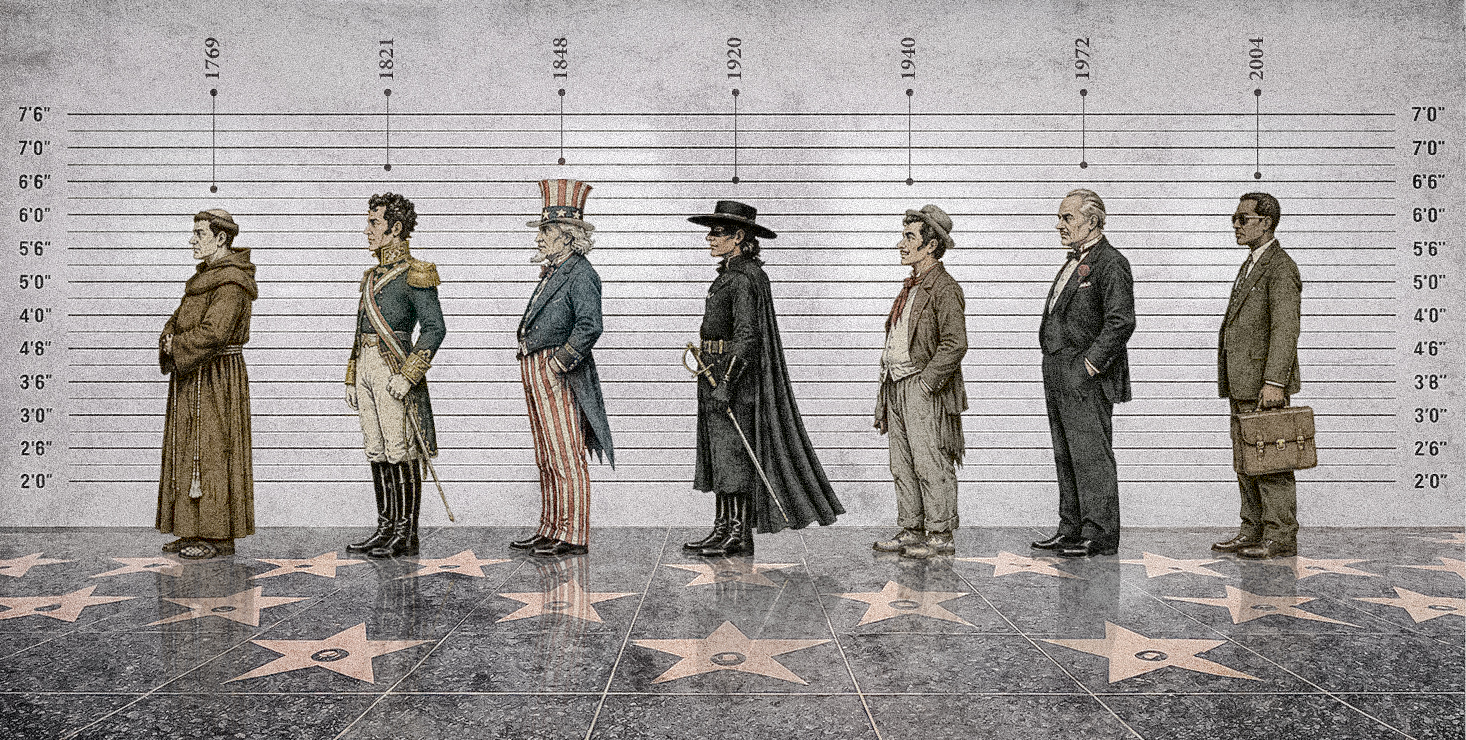
Perhaps that is why the Neo-Californian language found such fertile ground here during much of the twentieth century. It appeared in new neighborhoods, in family residences, in urban developments, and in many of the houses that would end up defining Mexico City's aspirational image for several generations.
It wasn't completely foreign.
But neither was it completely Mexican.
It was something more complex.
And the more I think about it, the more I like that idea.
Because the history of the Californian language is not really the history of an imported influence.
It is the story of an architecture that was born in the Old World, found a new life in New Spain, then became part of the territory of independent Mexico, crossed a new border when California became American territory, and ended up returning to its place of origin transformed into something different.
There is another movie that gives me a similar feeling.
The Ramos family residence in Man on Fire, starring Denzel Washington and filmed in Mexico City, is one of the most recognizable examples of this language. It is profoundly Mexican and, at the same time, fits perfectly within the American visual imagination.
It inhabits both worlds with surprising ease.
Perhaps that is why the house in The Godfather confused me so much.
Because I wasn't looking only at an American house.
Nor was I looking only at a Mexican house.
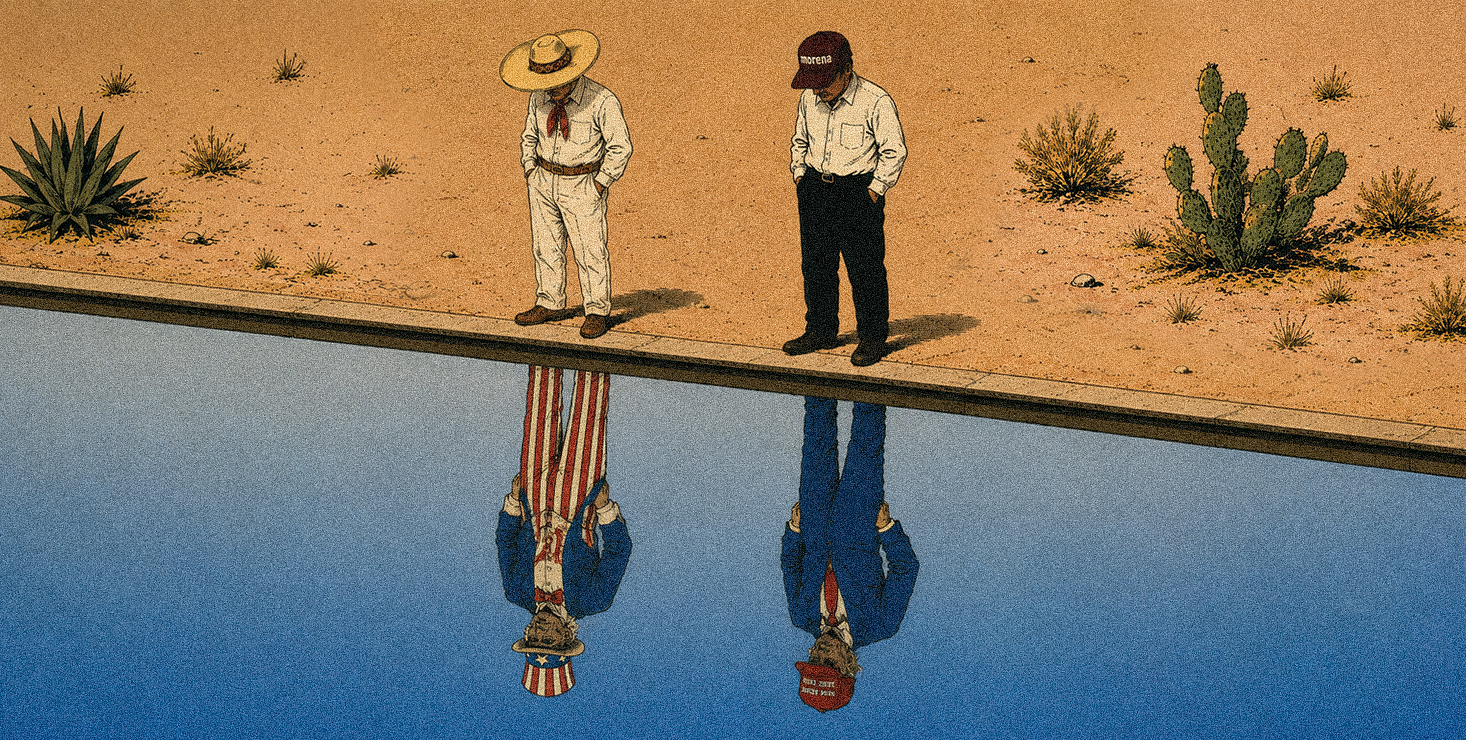
Perhaps that is why I like to think of the Californian language as a mirror.
Not because it reflects Mexico exactly, but because it allows us to see ourselves from somewhere else.
As if a part of our history had crossed a border, changed languages, and returned to show us something that had always been there.
A Californian mirror.
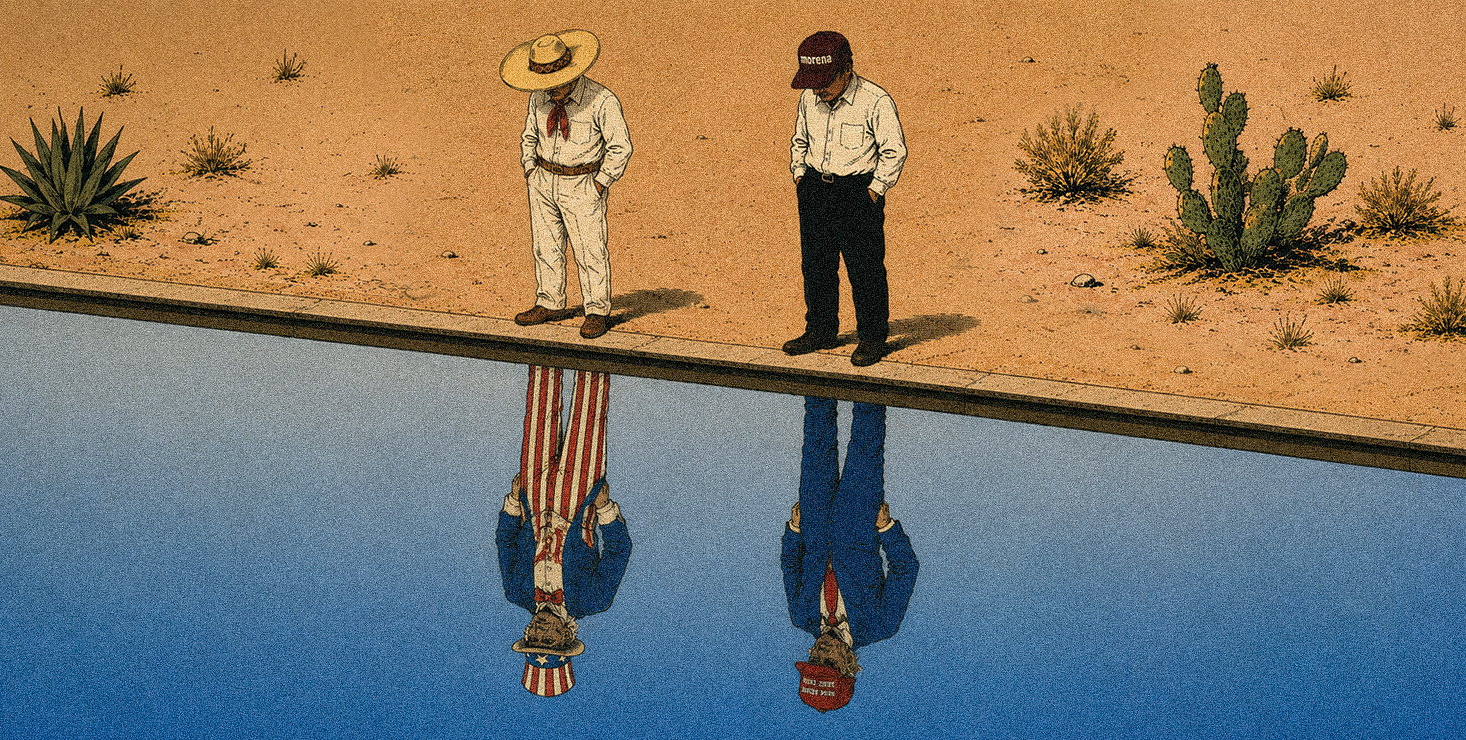
I was looking at an architecture that had spent centuries moving between cultures, languages, territories, and different ways of understanding the world.
And perhaps that is why I still think about it.
Because every time I return to that scene, California, Mexico, Hollywood, architecture, the trips to Cuernavaca, and my father's voice telling me a story to make the journey shorter all appear at the same time.
I still find it curious that a reflection on architecture, identity, and memory began in such a simple way.
With a child asking too many questions on a road.
And with a father who, just to get a little silence, ended up showing him a movie he would never forget.